




Food powder conveying looks simple from a distance. Material enters one side of the system, moves through the conveyor, and feeds the next processing stage. But inside many production plants, operators know the reality is far less predictable.
A powder line running smoothly in the morning can suddenly stop after lunch because milk powder begins bridging inside the hopper. Flour may accumulate along the screw trough during humid weather. Nutritional blends can degrade when conveying becomes unstable or overloaded. Once blockage starts, production efficiency drops immediately, and cleaning or troubleshooting often takes longer than expected.
For food manufacturers, these problems are not small operational inconveniences. They directly affect product quality, sanitation control, labor costs, and delivery schedules.
This is why selecting and operating the right food-grade powder conveyor has become increasingly important in modern food processing facilities. Stable conveying is no longer only about transport capacity. It is about maintaining smooth powder flow while protecting product consistency and hygiene standards at the same time.
Among different conveying systems, U-trough screw conveyors have become widely adopted because they provide better accessibility, stable powder movement, and easier maintenance compared with many traditional enclosed systems.
But even the best conveyor still depends on correct operation and proper design.
Why Bridging and Blockages Happen in Food Powder Conveying
Many conveying issues begin with powder behavior itself. Unlike solid particles, food powders respond strongly to environmental conditions. Moisture, temperature, particle size, fat content, and bulk density all influence how material flows inside a conveyor system.
According to research published by the U.S. Food and Drug Administration (FDA), powder handling systems in food processing must minimize contamination risks while maintaining consistent material transfer, especially for fine and moisture-sensitive ingredients.
In real production environments, four common factors usually contribute to bridging and blockages.
1. Moisture and Environmental Changes
Many food powders absorb moisture from the surrounding air. Flour, starch, protein powder, sugar, and seasoning blends can begin clumping when humidity levels rise. Once powder loses its free-flowing behavior, bridging may develop inside the conveyor inlet or along the screw path.
This problem becomes more severe in facilities where ambient temperature changes frequently between shifts.
2. Fine Powder Characteristics
The finer the powder, the more unpredictable its flow behavior can become. Very fine powders tend to compact under pressure. Some materials also generate cohesion between particles, increasing the likelihood of buildup along conveyor surfaces.
Milk powder and nutritional blends are common examples where unstable feeding may lead to uneven flow or material accumulation.
3. Improper Feeding Operation
Conveyors are often overloaded in an attempt to maximize throughput. However, feeding material faster than the conveyor’s design capacity can create unnecessary pressure inside the trough. This may lead to blockage, irregular feeding, or material degradation caused by excessive compression. Stable conveying requires consistent feeding rather than simply increasing speed.
4. Equipment Structure Limitations
The conveyor structure itself also matters. Systems with poor internal accessibility or uneven screw design may create dead zones where material accumulates over time. Once residue begins collecting inside the system, flow resistance increases and cleaning becomes more difficult. This is one reason many food plants increasingly prefer U-trough structures for powder handling applications.
How U-Trough Conveyor Design Improves Conveying Stability
A well-designed conveyor cannot eliminate powder handling challenges, but it can significantly reduce their frequency and operational impact.
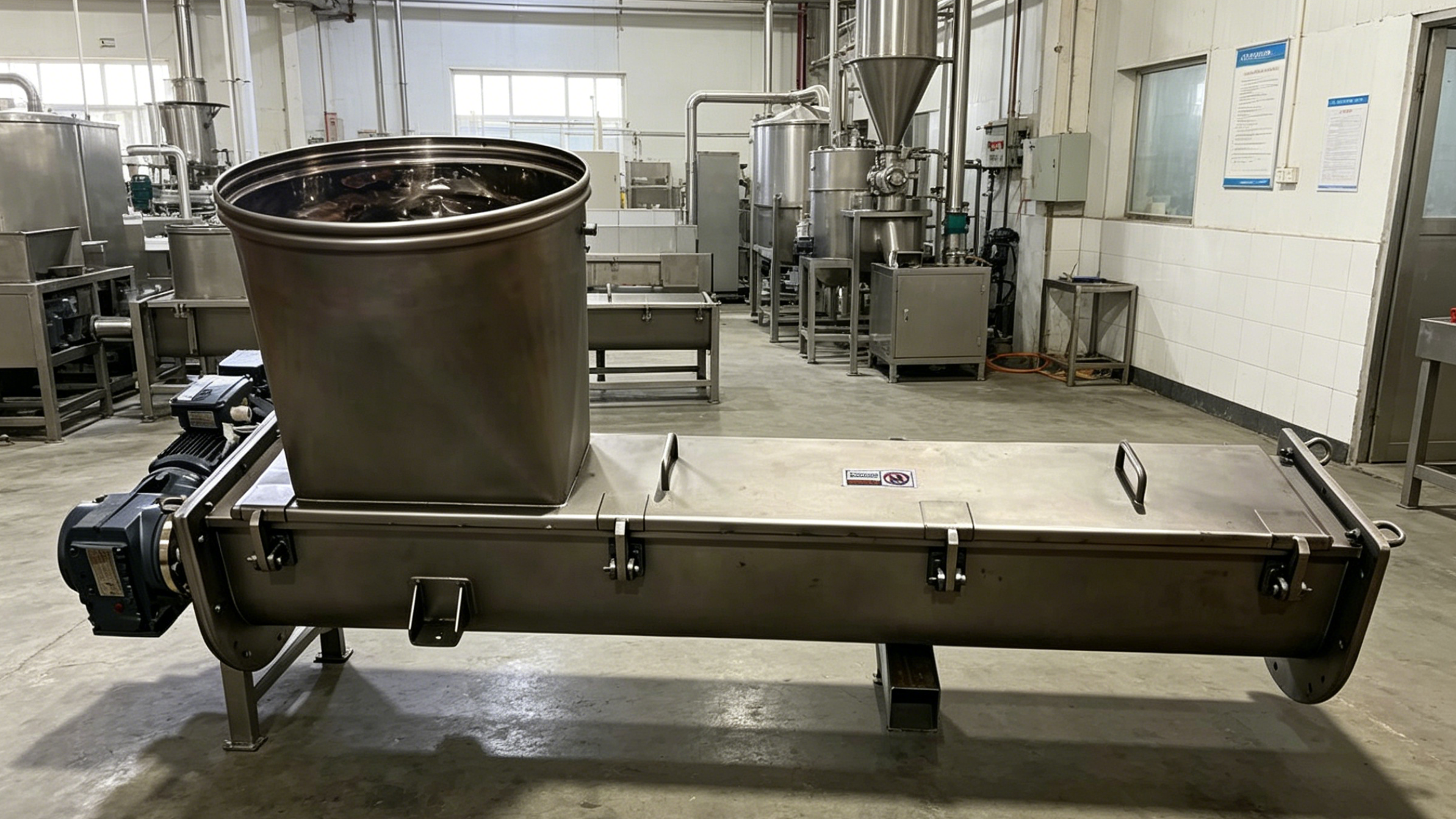
The engineering approach behind the Doebritz U-trough screw conveyor focuses specifically on improving powder flow consistency while simplifying maintenance and cleaning access. Instead of relying only on higher motor power or faster screw rotation, the system improves conveying performance through structural optimization.
1. Precision Screw Flighting for Uniform Material Flow
One of the biggest causes of unstable conveying is uneven powder movement inside the trough.
The precision-engineered screw flighting design helps maintain a more continuous and balanced material flow throughout the conveying process. By reducing irregular compression and minimizing dead angles, the system lowers the risk of bridging or localized material buildup.
This becomes particularly important for fragile or fine food powders that are sensitive to excessive mechanical stress.
Stable flow also helps reduce material degradation during transfer. In food production, degraded powder not only reduces product quality. It can also affect downstream processes such as dosing accuracy, mixing consistency, and pneumatic conveying stability.
2. U-Trough Structure Supports Smoother Powder Movement
The geometry of the conveyor structure has a direct influence on powder behavior. Compared with fully enclosed tubular systems, the U-trough structure provides a more accessible and open conveying environment. This design reduces hidden accumulation points where powder may compact or stick to internal surfaces.
Operators can also visually inspect material flow more easily during operation. In practical terms, this improves troubleshooting efficiency because abnormal accumulation or unstable feeding can often be identified before a serious blockage occurs.
The quick-dismounting cover design further supports operational efficiency by allowing rapid interior access during inspection or cleaning.
3. Adaptability Across Different Food Powders
Different powders create different operational challenges. Flour requires stable feeding without excessive compaction. Milk powder demands hygienic handling and low residue retention. Grain powders often require reliable throughput under varying bulk densities.
A flexible food-grade powder conveyor must adapt to these changing conditions without frequent modifications. The Doebritz U-trough conveyor is designed to support multiple food processing applications, including:
- Flour conveying
- Milk powder transfer
- Grain powder handling
- Additive feeding systems
- Pneumatic conveying integration
Its stainless steel construction using SUS304 or SUS316L materials also supports strict hygiene requirements in food manufacturing environments.

Stable Operation Depends on Daily Practices Too
Even advanced equipment performs best when operators follow consistent operating procedures. Many powder conveying problems develop gradually rather than suddenly. Small irregularities in feeding or maintenance often become major blockages later.
Several practical operating habits can significantly improve conveying stability.
1. Match Feeding Speed to Powder Characteristics
Operators sometimes assume a higher feeding speed means higher efficiency. In reality, powder flow behavior must match the conveyor’s operating capacity. Overfeeding may overload the screw system and increase compression inside the trough. The Doebritz U-trough conveyor supports capacities up to 634 L/min, but actual operating speed should still be adjusted according to powder density, moisture sensitivity, and particle behavior.
Maintaining stable and moderate feeding usually improves long-term conveying reliability more than maximizing short-term throughput.
2. Perform Daily Inspection of Critical Areas
Regular inspection helps identify problems before they interrupt production.
Operators should routinely check:
| Inspection Area | Purpose |
| Screw rotation stability | Detect abnormal vibration or resistance |
| Trough sealing condition | Prevent material leakage |
| Powder accumulation points | Reduce bridging risks |
| Cover tightness | Maintain hygienic operation |
| Feeding consistency | Avoid overload conditions |
These inspections typically require only a few minutes but can prevent hours of downtime later.
3. Respond Quickly to Early Blockage Signs
Minor flow interruptions should never be ignored. When operators notice irregular feeding, unusual motor load, or inconsistent discharge, early intervention is critical. Delayed troubleshooting often allows material buildup to worsen inside the conveyor.
The quick-dismounting structure of the U-trough conveyor simplifies emergency inspection procedures. Operators can rapidly open the upper cover and access the screw interior without complicated disassembly. This significantly reduces maintenance time compared with more enclosed conveying systems.
Real Operational Improvements in Blockage Reduction
In practical food processing environments, conveyor design improvements can produce measurable operational benefits. Based on internal application feedback from powder handling projects, optimized U-trough conveyor systems have demonstrated up to 90% lower blockage frequency compared with some traditional conveying structures operating under similar production conditions.
The improvement mainly comes from three factors:
- More uniform material flow
- Reduced powder accumulation zones
- Faster cleaning and troubleshooting access
While actual performance depends on powder type and operating conditions, the trend is clear: stable conveying begins with both proper equipment structure and consistent operational control.
Conclusion
Food powder conveying systems face constant operational pressure. Moisture changes, fine particle behavior, unstable feeding, and maintenance delays can all contribute to bridging, blockages, and material degradation.
Preventing these problems requires more than simply increasing conveying power. It requires a conveyor system designed for stable material flow, easy inspection, and hygienic operation.
This is why many food manufacturers increasingly choose U-trough food-grade powder conveyor systems for modern powder processing lines. Their accessible structure, stable conveying performance, and simplified maintenance procedures help reduce downtime while improving operational consistency.
Combined with proper daily operating practices, the right conveyor design can significantly improve both production efficiency and product quality.
The powder handling solutions we developed are designed with these real production challenges in mind, helping manufacturers achieve more reliable and stable conveying performance across a wide range of food powder applications.
Looking to reduce bridging, blockages, and powder degradation in your production line?
Contact Doebritz to discuss your food powder conveying requirements. Our engineering team can help you evaluate a more stable and hygienic conveying solution tailored to your processing environment.