





In powder pneumatic conveying production lines, equipment maintenance and batch changeover downtime directly lead to capacity loss and increased labor costs. Currently, most domestic powder plants still commonly use traditional flange-fixed rotary valves: the valve body is rigidly locked between pipelines with bolts. To inspect the rotor or clean material accumulation in the cavity, the entire valve body must be disassembled. A single maintenance operation can take several hours. With the upgrading of hygiene control standards in the food and fine chemical industries, and the increasing production demands of frequent multi-product changeovers, a hygienic rotary valve that is easy to disassemble, clean without residue, and operates stably has become an essential requirement for powder conveying systems.
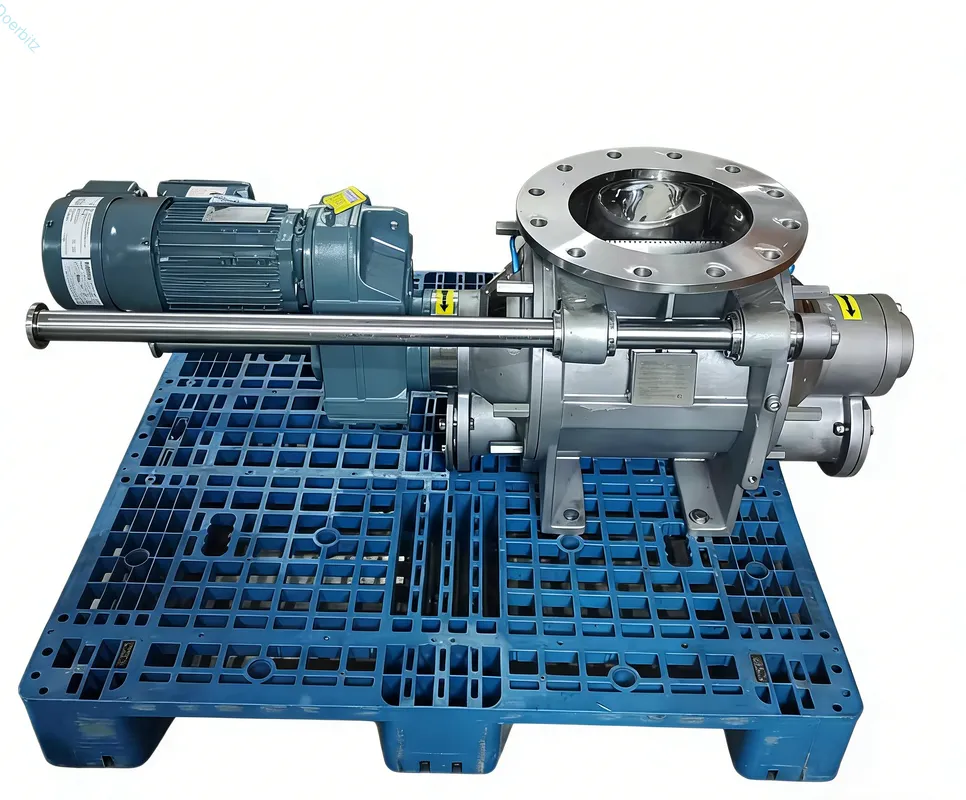
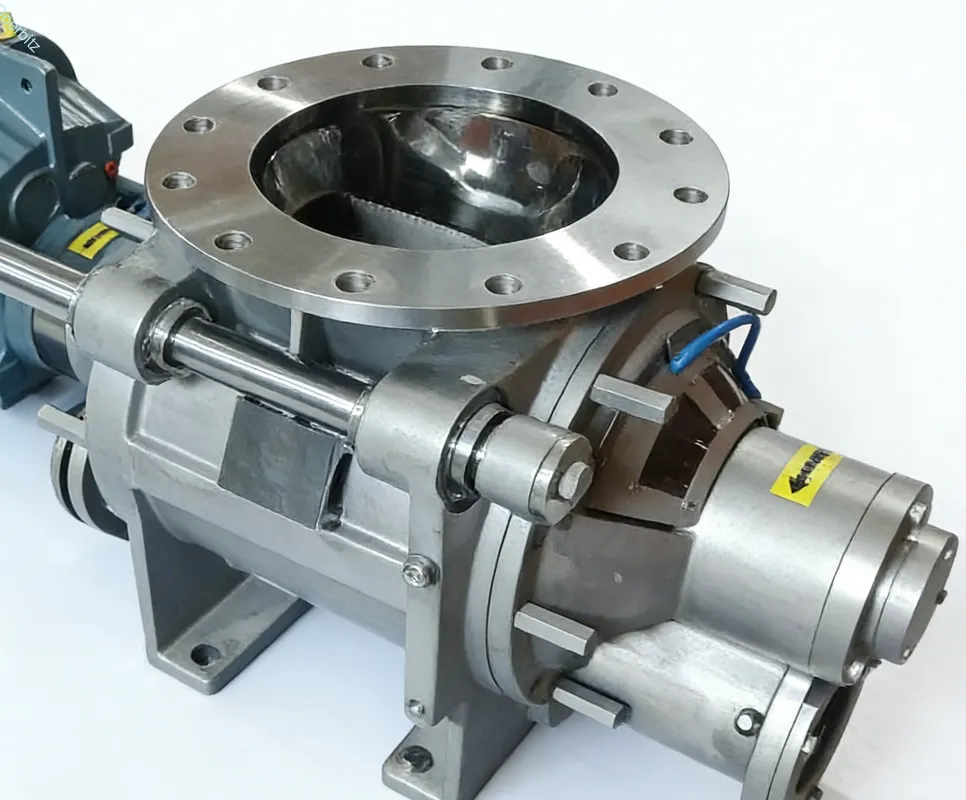
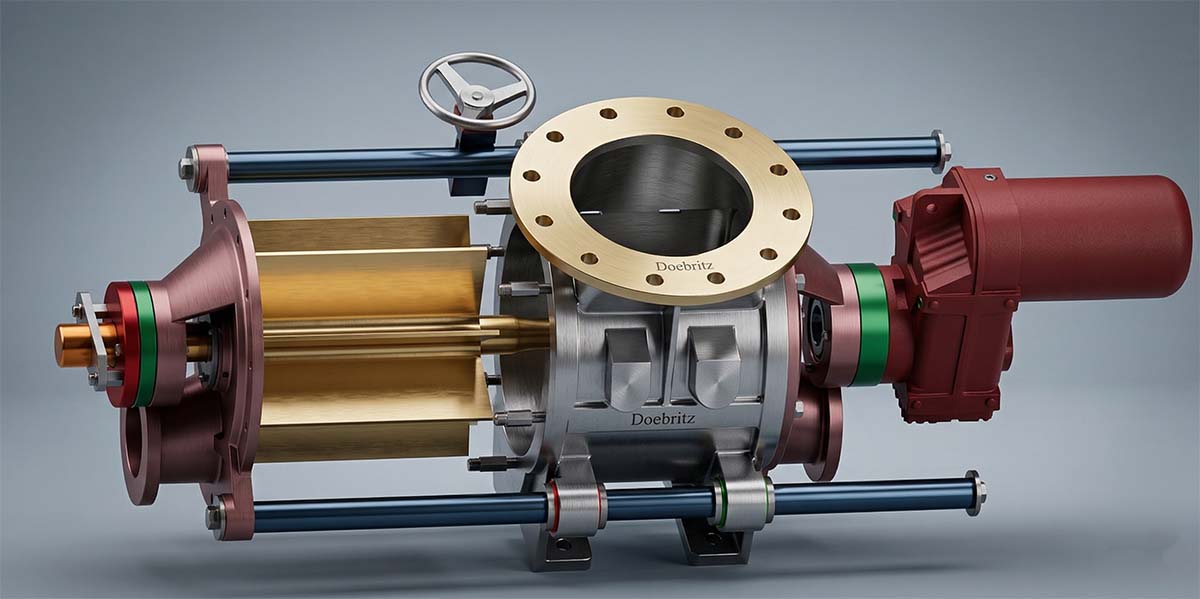
To address pain points in the powder industry such as cumbersome maintenance, cross-contamination, and downtime losses, Doebritz has launched a pull-out, easy-to-clean stainless steel rotary valve. This product is specifically developed for pneumatic conveying of powders and granular materials. It combines precise metered feeding with reliable air-sealing performance, significantly reducing equipment maintenance time and lowering the risk of contamination during product changeovers. The following article provides a professional analysis from multiple perspectives: industry pain points, applicable working conditions, customization process, and product value.
Traditional Fixed Rotary Valves Are Gradually Becoming Bottlenecks in Powder Production Lines
In applications such as food powders (flour, milk powder, sugar powder), fine chemical powders (pigments, chemical additives), grain and pellet conveying, and process dust collection discharge systems, rotary valves perform two core process functions: quantitative continuous feeding to ensure stable conveying flow, and differential pressure sealing to prevent pipeline pressure leakage. However, the structural deficiencies of these old, continuously operating key devices are now restricting the production efficiency of entire lines. The pain points are concentrated in maintenance.
1. Cumbersome Maintenance Procedures, High Downtime and Labor Costs
When performing rotor inspections, fault repairs, or cavity cleaning on a traditional fixed rotary valve, operators must disassemble all inlet and outlet flange bolts one by one, and use lifting equipment or manual force to separate the entire valve body from the pipeline. Under normal conditions, a single disassembly and reassembly takes 2–3 hours. In cases of corroded bolts or cramped installation spaces, maintenance can take half a day. For continuous powder processing lines, unplanned downtime or prolonged shutdowns directly reduce capacity and generate unnecessary labor costs.
2. Many Dead Zones for Material Accumulation in the Cavity, Uncontrollable Cross-Contamination Risk
Traditional valve bodies have several dead zones where material accumulates, including: the gap between the end cover and the valve body, the axial clearance between the rotor end face and the end cover, and the shaft seal assembly cavity. Powder tends to build up and harden in these areas, and conventional purging cannot thoroughly clean them. During product changeovers, residual material mixed with new material directly leads to substandard product quality. In the food and pharmaceutical industries, this can even cause batch rejection or product recalls. Even with strict disassembly and cleaning procedures, frequent disassembly accelerates seal wear, and improper assembly can cause clearance deviations, worsening air and powder leakage.
3. Limited Adaptability to Operating Conditions, Insufficient Stability Under High Differential Pressure
Most traditional rotary valves are only suitable for a narrow range of pressure and temperature conditions, making them unable to adapt to variable-condition conveying systems. When pipeline pressure fluctuates between negative and slightly positive pressure, or when material temperature is high (e.g., dried powder >100°C), the valve is prone to increased differential pressure leakage, material jamming, and premature seal aging. While such valves can meet basic conveying requirements, their operational stability under variable conditions is poor, limiting their application scenarios.
To address these industry pain points, a quick-dismantling rotary valve that allows axial or lateral rotor extraction without removing the main pipeline has become the mainstream optimized solution. The Doebritz pull-out rotary valve retains the excellent sealing and feeding performance of traditional valves while completely rethinking maintenance and cleaning logic from a structural perspective, making it suitable for high-cleanliness, high-frequency changeover industrial scenarios.
High-Requirement Powder Applications: Analysis of Suitability for Pull-Out Rotary Valves
In powder conveying processes, wherever there is a need for frequent product changeovers, high cleanliness requirements, regular disassembly for cleaning and maintenance, or cross-contamination prevention, traditional fixed rotary valves become system bottlenecks. The pull-out quick-dismantling structure is specifically designed for demanding conditions and is suitable for four core application scenarios:
1. Food Powder Processing Industry
Food powders come in many varieties (flour, sugar powder, milk powder, starch, etc.), and frequent product switching means that even trace amounts of residual material can contaminate an entire batch. Traditional valves require pipeline disconnection for disassembly and cleaning, which is time-consuming and occupies production capacity. The pull-out rotary valve allows the rotor assembly to be completely extracted without disassembling the main pipeline. Combined with high-pressure water jets and specialized cleaning tools, the valve cavity inner wall and rotor vanes can be cleaned without dead zones. Routine changeover cleaning can be completed in less than ten minutes. This valve is well-suited for multi-product, small-batch flexible production modes, effectively releasing line capacity.
2. Fine Chemical Sensitive Powders
Materials such as pigments, catalysts, and chemical additives have high added value and poor recipe compatibility; cross-contamination directly leads to material scrapping and economic loss. This pull-out rotary valve allows complete separation of rotor and cavity, enabling operators to visually inspect all contact surfaces, detect residual material, and achieve visual cleanliness control. It meets the production needs of fine chemical batching and quick recipe changes.
3. Grain and Pellet Conveying Applications
During pneumatic conveying of granular materials like corn, wheat, and soybeans, the inner wall of the valve is subject to abrasive wear. Additionally, impurities such as straw, twine, and stones carried with the material can easily wrap around or jam the rotor. Troubleshooting traditional valves requires pipeline disconnection, flange removal, and hoisting of the valve body, leading to long repair times. The pull-out structure allows the rotor to be extracted in minutes without modifying the pipeline, clearing entanglements and checking wear, greatly reducing fault downtime and improving maintenance efficiency.
4. Process Dust Collection Discharge Systems
At the discharge points of baghouse filters and powder dust collection equipment, the valve must provide both differential pressure sealing and convenient maintainability. The pull-out rotary valve works stably with negative-pressure or slightly positive-pressure dust collection lines, offering excellent air sealing performance. It also supports quick rotor extraction for routine dust inspection and wear detection, meeting hygiene traceability and compliance requirements in the food and pharmaceutical industries.
The core process requirements across these scenarios are highly consistent: stable, metered discharge; wide-range differential pressure sealing; quick disassembly; dead-zone-free cleaning; and visual inspection. This is the most significant differentiating value of the pull-out structure compared to traditional valves.

Customized R&D: A Professional Design Process Tailored to Your Conveying Conditions
High-performance pull-out rotary valves are not standard mass-produced items; they are custom-engineered based on material characteristics, site pipeline layout, and installation space. The entire process from requirement collection to factory delivery forms a complete technical collaboration workflow, avoiding the poor adaptability and on-site installation interference problems of generic valves.
1. Collection of Operating Parameters for Precise Performance Matching
Early collection of comprehensive operating data: material name, bulk density, material temperature, adhesiveness, corrosiveness; pipeline pressure conditions (negative/slightly positive pressure, pressure fluctuation range); rated conveying capacity (kg/h, L/min). Also collect existing equipment malfunction pain points, such as air leakage, material jamming, material buildup, and seal aging, to provide data support for structural optimization and accessory selection. The more detailed the operating parameters, the better the valve fit.
2. Material and Surface Finish to Meet Industry Hygiene Standards
The valve body is standardly made of high-quality stainless steel (SS304/316L). For food and pharmaceutical applications with direct material contact, a mirror-polished finish is provided, with controlled surface roughness to comply with industry hygiene regulations. For abrasive or corrosive special materials, rotor hardness and seal materials are optimized to extend equipment service life, making it suitable for complex chemical and powder applications.
3. Verification of Connection Flanges and Pull-Out Direction to Avoid On-Site Interference
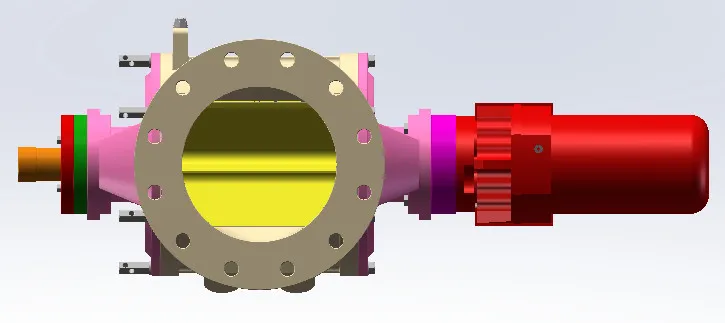
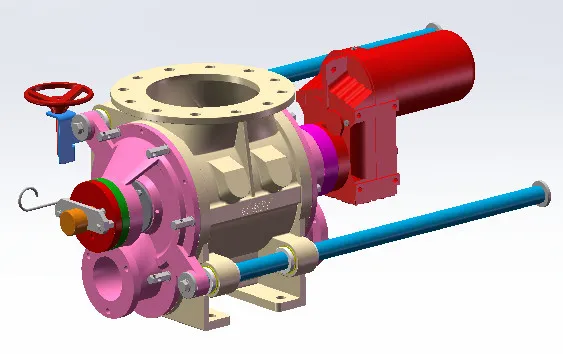
Confirm pipeline flange standards (GB, ANSI, DIN). Accurately survey the on-site installation space, identifying obstacles such as support columns, platforms, and cable trays. Customize the rotor pull-out mode (left pull, right pull, front pull) and accurately calculate the pull-out stroke. Many generic valves neglect space verification, leading to rotor collision with steel structures or equipment during extraction. Customized design eliminates such issues at the drawing stage.
4. 3D Modeling and Simulation for Virtual Pre-Assembly in the Production Line
Based on the customer’s pipeline routing, equipment spacing, and installation dimensions, engineers build a 3D pipeline model, simulate the entire rotor extraction motion, verify the movement trajectory, and identify any interference or insufficient disassembly space. If structural conflicts exist, fine-tune the flange eccentricity, valve mounting angle, and pull-out direction to ensure the equipment can be installed and used immediately upon arrival.
5. Rigorous Factory Testing to Guarantee On-Site Operational Stability
After completing machining and assembly according to the customized drawings, each valve undergoes air-tightness testing, rated flow calibration, and differential pressure sealing testing before leaving the factory to identify issues such as air leakage, jamming, or flow deviation. With virtual pre-assembly and performance validation done at the factory, on-site commissioning difficulty is reduced, achieving plug-and-play installation.

Conclusion
Doebritz always focuses on the real pain points in powder conveying. The pull-out, easy-clean stainless steel rotary valve, with its revolutionary quick-release design, slashes disassembly and assembly time from hours to just minutes—finally putting an end to the struggles of difficult cleaning, slow changeovers, and cross-contamination that plague traditional valves.
We know that every minute of downtime means lost production capacity, and every batch contamination poses a quality risk. That’s why Doebritz delivers not just a piece of equipment, but an efficient maintenance solution that is “pull out to clean, push in to run.”
From food powders to fine chemicals, from grain conveying to dust removal and ash discharge, countless production lines have already achieved higher maintenance efficiency and throughput thanks to our custom-engineered designs.
Contact Doebritz – provide your material characteristics, line pressure, and flow rate parameters. Our engineering team will match you with the ideal pull-out direction, material finish, and sealing solution, ensuring that every rotary valve is perfectly tailored to your production line.
Doebritz – your reliable partner for quick-release rotary valves, keeping your line running reliably and delivering long-term value.