




In many food processing plants, conveyor problems rarely appear all at once. They usually begin quietly.
A small amount of powder residue remains inside the trough after cleaning. A loose cover clamp creates minor material leakage. Bearings start generating slightly abnormal noise during operation. None of these issues seems urgent in the moment, yet over time they slowly reduce conveying stability, increase maintenance costs, and eventually lead to unexpected shutdowns.
For manufacturers handling flour, milk powder, starch, seasoning blends, or nutritional ingredients, an unplanned conveyor failure is more than a maintenance inconvenience. It can interrupt entire production schedules, delay deliveries, increase contamination risks, and create expensive cleaning procedures.
This is why routine maintenance has become a critical part of operating any modern food-grade powder conveyor system. Good maintenance is not simply about repairing equipment after problems occur. It is about preventing instability before it affects production.
In food-grade powder handling environments, a well-maintained conveyor can improve operational reliability, extend equipment lifespan, and significantly reduce long-term operating costs.
Why Daily Maintenance Matters More Than You Think
Many food processing managers treat conveyor maintenance as a “when it breaks, fix it” activity. That approach is actually the most expensive one.
For a food-grade powder conveyor, daily maintenance directly impacts three critical areas:
Operational continuity – A small issue like a loose cover seal, if ignored, leads to powder leakage, then to bearing contamination, then to a full motor overload. Catching it early costs minutes. Fixing it after failure costs hours or days.
Hygiene compliance – Food-grade equipment must maintain cleanable surfaces. Scratches, pits, or accumulated residue in the stainless steel trough become breeding grounds for bacteria. Regulatory audits (BRC, FSSC 22000, etc.) require documented maintenance and inspection records.
Total cost of ownership – A standard food-grade powder conveyor operating under normal conditions can last 10 to 15 years with proper care. Without maintenance, the lifespan often drops to 3 to 5 years, and replacement costs multiply.
The following sections break down exactly what to do – daily, weekly, monthly, and quarterly. The goal is to make maintenance a routine, low‑effort habit rather than a dreaded event.
Basic Maintenance Principles for Stainless Steel Food Powder Conveyors
Before diving into checklists, understand the three principles that guide all maintenance decisions for a food-grade powder conveyor made of SUS304 or SUS316L stainless steel.
Principle 1: Protect the passive layer
Stainless steel is not truly “stainless” by magic. It has a thin chromium oxide layer that resists corrosion. This layer can be damaged by carbon steel brushes, harsh chlorides (like bleach), or abrasive tools. Never use carbon steel wire brushes or scrapers on the conveyor surfaces. Stick to nylon, silicone, or stainless steel brushes approved for food equipment.
Principle 2: Keep it dry between uses
Moisture is the enemy of powder conveying. Even with stainless steel, standing water can lead to pitting corrosion over time – especially if your powder contains salt or acidic components. After wet cleaning, always wipe the trough and screw dry or run the conveyor empty for 30 seconds to air‑dry.
Principle 3: Document what you see
A quick mental note is not enough. Keep a simple log sheet (paper or digital) with the date, operator name, and three checkboxes: screw rotation okay, cover seals intact, no leakage. This log becomes your evidence during audits and helps you spot degradation trends before failures occur.
Now let us apply these principles to the Doebritz U‑Trough Screw Conveyor as a working example.
Daily Maintenance Checklist: 5 Minutes That Save Hours
Every shift that uses the food-grade powder conveyor should perform these five checks. They take less than five minutes total.
Check screw rotation before loading – Turn on the conveyor while the trough is empty. Listen for even, quiet rotation. Any scraping or irregular clicking indicates powder buildup on the flighting or a foreign object inside. Stop immediately and open the quick‑dismounting cover for inspection.
Inspect cover tightness – The Doebritz U‑trough uses quick‑release clamps. Make sure each clamp is fully engaged. A loose cover not only leaks powder but also allows moisture ingress during idle periods.
Look for material leakage at joints – Run the conveyor for 30 seconds while observing the inlet flange, outlet flange, and bearing seals. Even a tiny dust trail indicates a seal that needs adjustment. Leakage wastes product and creates slip hazards.
Check temperature and pressure indicators – For systems connected to pneumatic lines, verify that the operating temperature stays within ‑10°C to 150°C and pressure within ‑0.5 to 2 bar. Exceeding these ranges stresses the seals and flighting. The Doebritz conveyor is rated for these limits, but external conditions can push them.
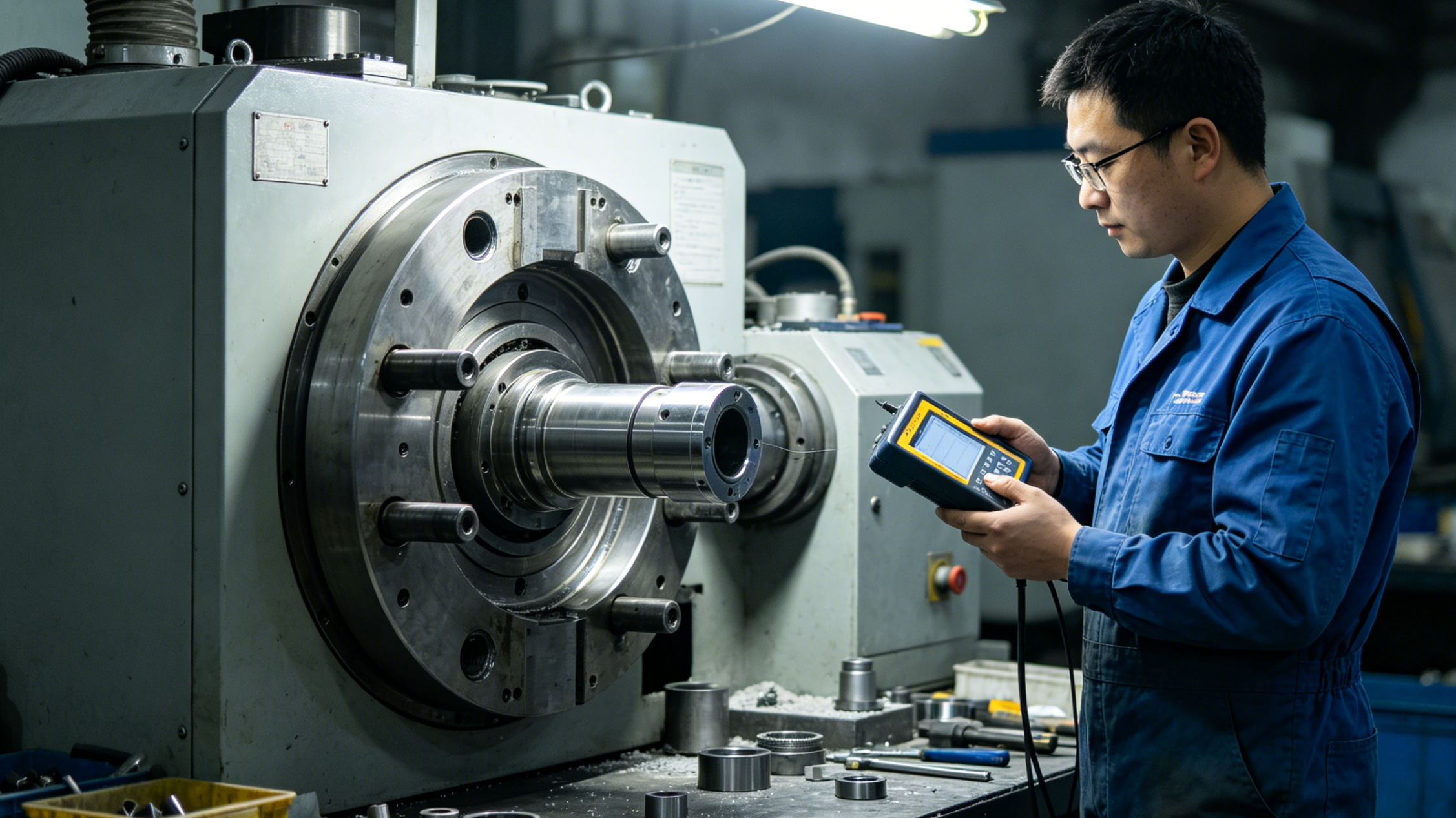
Listen for bearing noise – Place a screwdriver handle against your ear and the blade against the bearing housing. A smooth whirring sound is normal. Grinding or clicking means bearing wear – order replacements immediately.
If all five checks pass, start production with confidence. If anything fails, stop and address it. That five‑minute investment prevents hours of unplanned downtime later.
Weekly Maintenance: Digging a Little Deeper
Once per week, set aside 20 minutes for a more thorough inspection. This is especially important for food-grade powder conveyors handling sticky or fine powders.
Lubricate transmission parts – The drive chain or gearbox (depending on your configuration) needs lubrication according to manufacturer specifications. Use food‑grade lubricants (NSF H1) to prevent contamination risks. Do not over‑grease – excess lubricant can migrate into the trough area.
Clean trough edges and seal grooves – Open the quick‑dismounting covers fully. Use a soft brush to remove powder that accumulates in the clamp grooves and cover sealing channels. These small crevices are the most common hiding spots for old product residue.
Inspect quick‑release components – The clamps and hinges should move freely. Apply a thin film of food‑grade anti‑seize to the clamp threads if they feel stiff. Replace any clamp with a worn or damaged gripping surface.
Verify screw flighting gap (visual check) – With the covers open, look along the entire length of the screw. The gap between the flight edge and the trough bottom should be consistent, roughly 3‑5 mm depending on the model. An uneven gap indicates flight wear or trough deformation, which reduces conveying efficiency.
This weekly routine takes about 20 minutes but catches issues that daily checks might miss. Many food plants schedule this for Friday afternoons before weekend shutdowns.
Monthly Maintenance: A Systematic Review
Monthly maintenance requires about one hour. This level of inspection is often specified in food safety plans (HACCP, FSSC 22000) as part of the environmental monitoring and equipment integrity program.
Inspect stainless steel surface finish – The interior of a food-grade powder conveyor should have a Ra < 0.8 μm surface finish. Over time, scratches or pits can appear. Run a fingertip (with a clean glove) along the trough bottom and the screw flighting. Any roughness or visible pitting should be documented. Minor scratches can be polished using a fine-grit (180‑240) non‑woven abrasive pad designed for stainless steel. Never use random sandpaper – it leaves embedded grit.
Check screw wear more precisely – Using a caliper, measure the flighting thickness at three points (inlet, middle, discharge). Compare to the original specification (usually 4‑6 mm for food-grade conveyors). If the thickness has reduced by 20% or more, plan to replace the screw assembly within the next three months. Continuing to run with worn flighting accelerates through wear and reduces conveying capacity.
Verify power supply stability – Loose electrical connections cause intermittent operation and motor overheating. Check terminal screws in the motor junction box and control panel. Look for signs of discoloration or melted insulation. This is especially important for variable‑frequency drive (VFD) controlled conveyors.
Test cover seal integrity – Close the quick‑dismounting covers and run the conveyor under normal load. Use a piece of thin paper (e.g., tissue) along the cover seams. If the paper moves outward, you have air leakage. Adjust clamp pressure or replace the food‑grade gasket material. Air leaks can entrain moisture or cause powder blowout.
Quarterly Maintenance: The Complete Inspection
Every three months, plan for a half‑day of thorough maintenance. This should be scheduled during a planned production pause.
Overall disassembly inspection – Unclamp all covers and lift the screw assembly out of the U‑trough. This is a unique advantage of the U‑trough design – the screw can be removed vertically without disconnecting pipe flanges. Place the screw on a clean work surface. Inspect both sides of the flighting – the underside often hides compacted powder that normal cleaning misses.
Replace wear parts proactively – Common service items include the end bearing seals, the shaft packing glands (if present), and the quick‑release gaskets. Do not wait for these parts to fail. A bearing seal that costs 20can, if failed, cause a bearing seizure that damages the shaft–a 500 repair.
Compliance verification – For food-grade powder conveyors, verify that all surfaces remain free of cracks, rough welds, or areas that cannot be cleaned. Use an ATP swab test on a hidden area (e.g., under a cover hinge) to confirm that your cleaning protocol is effective. Acceptable levels for food contact surfaces are <30 RLU (relative light units) per most standards.
Check alignment and mounting – Over time, floor vibration can shift the conveyor’s support frame. Use a spirit level to check that the trough is still level. An incline as small as 0.5 degrees can change powder flow characteristics. Adjust shims as needed.
After quarterly maintenance, run the food-grade powder conveyor empty for two minutes, then under load for five minutes, while observing all indicators. Document the results in your maintenance log.
Maintenance Cost Control Tips Without Cutting Corners
Maintenance costs are inevitable, but they can be managed intelligently. The Doebritz easy‑cleaning design offers concrete ways to reduce maintenance spending.
Leverage the quick‑dismounting structure to reduce labor time – In a tubular conveyor, a full cleaning and inspection might take two hours because you need to disassemble flanges. With the Doebritz U‑trough, the same task takes 20 minutes. Labor cost per inspection drops by 80%. Over a year of weekly inspections, that adds up to significant savings.
Choose appropriate spare parts – Always use OEM or certified equivalent seals, gaskets, and bearings for food-grade powder conveyors. Generic parts may have different compliance ratings (e.g., not FDA‑approved for contact). However, you do not need to stock every part. Keep only high‑wear items: two sets of cover gaskets, one set of end seals, and one bearing kit. Order other parts as needed.
Train operators on basic maintenance – The daily and weekly checks do not require an engineer. A one‑hour training session for your line operators covers all the essential steps. Empowered operators catch problems earlier. One food plant we worked with reduced its maintenance callouts by 60% after implementing operator‑led daily checks [internal data, Doebritz customer survey 2023].
Schedule maintenance during planned downtime – Align your quarterly inspections with other production stops (e.g., for filter changes or deep cleaning). This eliminates separate shutdowns.
Common Maintenance Faults and How to Fix Them
Even with excellent care, issues can arise. Here are the three most common faults in a food-grade powder conveyor – and their solutions.
Fault 1: Abnormal noise during operation
Possible causes: Worn bearing, foreign object in trough, loose chain/belt.
Soluzione: Immediately stop the conveyor. Open the quick‑dismounting cover and visually inspect. If clear, check bearings by attempting to move the shaft laterally – any play means replace the bearing. For chain drives, check tension; a chain should deflect about 1% of its span length.
Fault 2: Material leakage from cover seams
Possible causes: Gasket worn, clamps not tight, trough deformed.
Soluzione: Replace the gasket first (most common). If leakage continues, check that the trough rim is straight – a slight bend can occur from improper cover removal. Straighten gently with a rubber mallet. For the Doebritz conveyor, replacement gaskets are available as standard parts.
Fault 3: Unstable conveying (intermittent flow)
Possible causes: Inconsistent feed rate, screw flighting wear, powder bridging upstream.
Soluzione: Verify that the upstream hopper is not empty. Then measure the screw flighting gap as described in monthly maintenance. If the gap exceeds 7 mm, the screw can no longer push powder effectively. Replace the screw assembly. Also check that the operating temperature is within the rated ‑10°C to 150°C range – cold powders flow less easily.

Conclusione
A food-grade powder conveyor is a core asset in any food processing line. With a clear, tiered maintenance plan – daily visual checks, weekly lubrication and seal inspection, monthly surface and wear measurement, and quarterly full disassembly – you can extend equipment lifespan from 5 years to 15 years or more. More importantly, you reduce the risk of unplanned downtime, which costs far more than any replacement part.
Il Doebritz U‑Trough Screw Conveyor is designed with maintenance in mind. The quick‑dismounting covers, accessible screw assembly, and hygienic stainless steel finish make routine care simple and fast. But even if you use another brand, the principles in this guide apply. Start with the daily checklist tomorrow. Train your operators. Document what you find. You will see the difference in lower repair bills and higher production uptime.
Are you spending too much time on conveyor repairs or facing unexpected shutdowns? Doebritz offers a free maintenance assessment for your existing food-grade powder conveyor – regardless of brand. We will review your current practices, provide a custom checklist, and show you how the U‑trough design can cut maintenance time by up to 80%.
For more information about our products and services, please contact us or click on the contact information on our website homepage, fill in your requirements, and our technical experts will contact you as soon as possible.