

Descrição
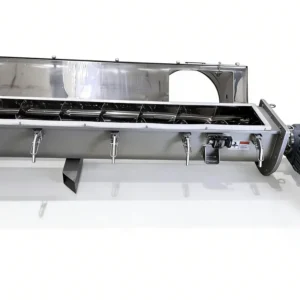
O Multi-Layer Precision Vibration Sifter is designed for accurate screening, impurity removal, and particle classification of powders, granules, finished products, and semi-finished materials. With a multi-layer screen structure, the machine helps improve grading accuracy and supports stable product quality in industrial powder handling processes.
As a professional vibration sifter manufacturer and supplier, Döbritz provides screening solutions for food processing, chemical powder handling, pharmaceutical materials, battery materials, and other bulk solid applications. The equipment can be configured according to material characteristics, target particle size, moisture level, screening capacity, and process requirements.
Purpose and Equipment Selection
Vibration sifters are widely used in quality control processes to remove oversized particles, impurities, and agglomerates while ensuring consistent particle size distribution. For materials with higher moisture or stronger adhesion, vibration screening can improve material flow and screening efficiency. For fine powders, electromagnetic or precision screening systems may be selected based on process requirements.
The multi-layer screen design allows multiple particle sizes to be separated in one screening process, making it suitable for applications that require more accurate classification and cleaner material output.
Operation Guidelines
Before operation, operators should inspect the screen mesh condition, confirm that all fasteners are secure, and remove any residual materials from previous production. This helps prevent leakage, cross-contamination, and unstable screening results.
During operation, amplitude, frequency, and mesh aperture should be adjusted according to material properties. Sticky or difficult-flowing materials may require higher vibration intensity, while fine powders require more precise mesh selection and stable material feeding. Operators should also monitor material distribution, mesh blockage, and motor performance to maintain consistent screening efficiency.
Common Problems and Maintenance
If screening efficiency decreases, the screen mesh should be checked for blockage, wear, or damage. Poor screening results are often caused by clogged mesh, incorrect aperture selection, uneven feeding, or insufficient vibration intensity.
For long-term stable operation, the screen surface should be cleaned daily, bolts should be tightened regularly, and key wearing parts such as screen mesh, seals, and bearings should be inspected periodically. Regular maintenance helps extend machine service life and reduce unplanned downtime.
Need a customized vibration sifter for your powder handling line? Contact Döbritz to discuss your material type, screening capacity, mesh size, and process requirements. Our team can provide suitable equipment selection, technical support, and quotation for your project.