



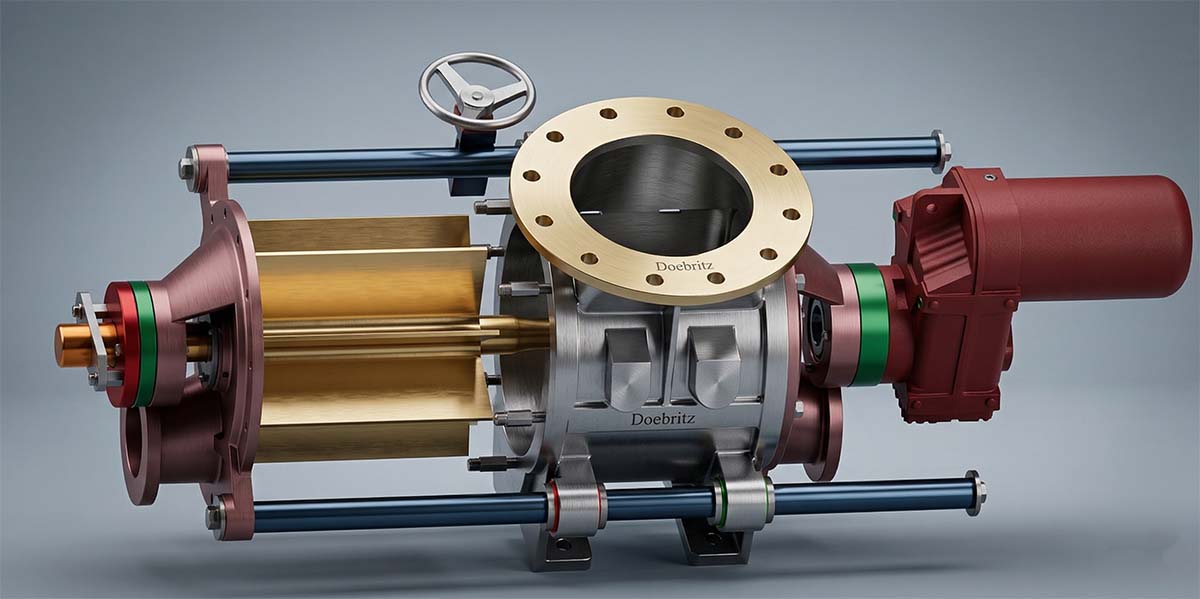
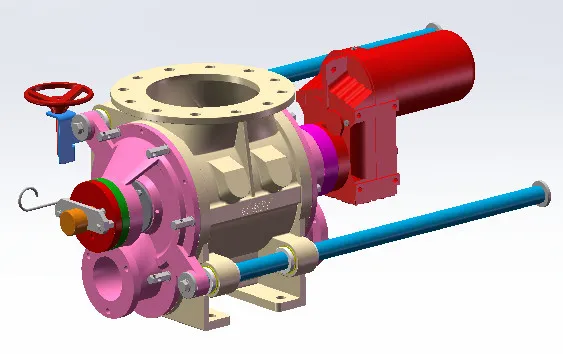

Comprendre comment la vanne rotative à sas empêche les fuites de matière dans le transport pneumatique
En tant que fabricant spécialisé dans les vannes rotatives pour la manutention de poudres, Doebritz constate régulièrement que les responsables d’usine et les ingénieurs de procédés sont confrontés à des pertes de pression inexpliquées, à des nuages de poussière persistants et à de graves problèmes d’inefficacité au sein de leurs lignes de manutention de produits en vrac. De nombreux opérateurs attribuent à tort ces problèmes au ventilateur principal ou au réseau de tuyauterie, en négligeant complètement les points de transition critiques où les matières premières pénètrent dans des zones sous haute pression. Ces fuites cachées au niveau des points d'alimentation compromettent la sécurité au travail, perturbent le flux de matière et font grimper les coûts énergétiques quotidiens à un niveau alarmant.
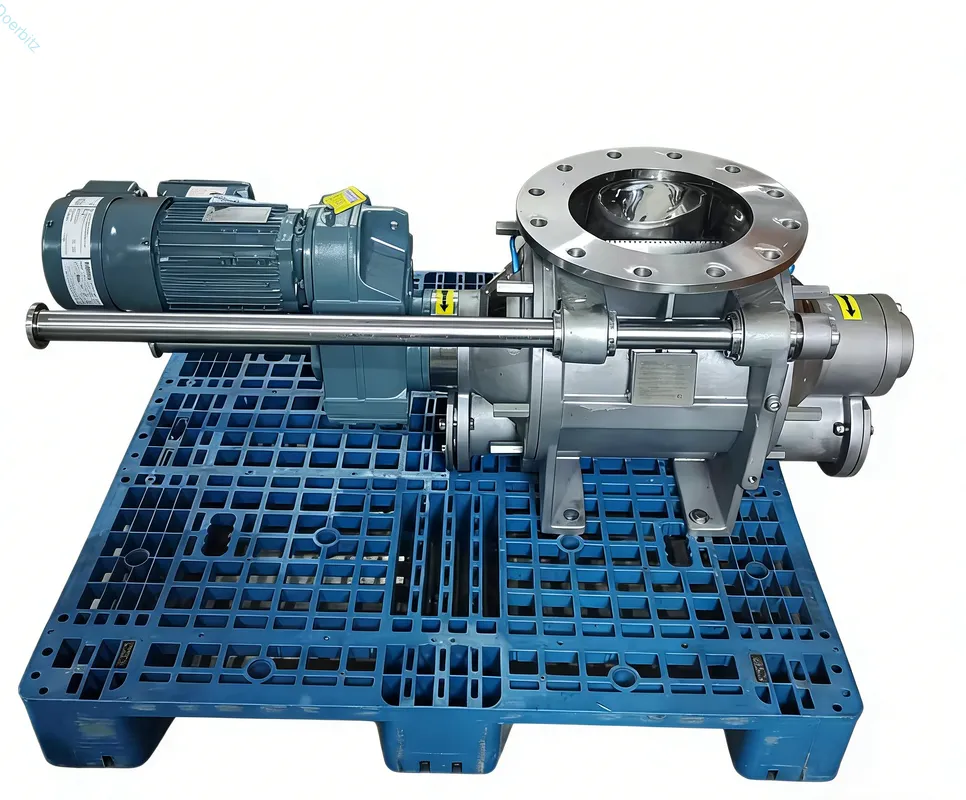
Une vanne rotative à sas empêche les fuites en faisant office de joint mécanique rotatif continu qui permet aux matières solides en vrac de passer sans encombre tout en empêchant efficacement l'air de transport sous haute pression de s'échapper vers l'arrière dans la trémie en amont.
Dans ce guide complet, nous mettrons à votre disposition nos décennies d'expertise en matière de fabrication afin de vous expliquer en détail le fonctionnement interne des systèmes d'étanchéité de ces composants essentiels. En comprenant ces principes fondamentaux, vous serez parfaitement armé pour prendre de meilleures décisions techniques, éliminer les risques liés aux retours de poudre et garantir que vos systèmes de manutention de poudre fonctionnent avec une efficacité optimale.
Pourquoi les systèmes pneumatiques présentent-ils des fuites ?
Les systèmes pneumatiques présentent des fuites car d'importantes différences de pression poussent l'air de transport et les poudres fines à refluer par des interstices inadaptés au niveau des points d'alimentation en matière.
Chaque ligne de transport pneumatique fonctionne selon un équilibre extrêmement délicat entre la pression atmosphérique et la pression d'air comprimé. Lorsque des solides en vrac pénètrent dans une ligne de transport à haute pression à partir d'un silo standard à basse pression, l'air comprimé cherche naturellement le chemin offrant le moins de résistance. En l'absence d'une barrière correctement conçue, cet air sous pression s'engouffre vers le haut par l'ouverture d'alimentation.
Ce phénomène entraîne des problèmes immédiats et en cascade pour l'ensemble de l'installation. Il perturbe considérablement le débit d'alimentation prévu, provoquant des irrégularités imprévisibles dans le dosage, et génère des émissions de poussière extrêmement dangereuses qui menacent la sécurité respiratoire. De plus, la perte rapide de pression de transport conduit inévitablement à de graves obstructions des conduites, dont le débouchage nécessite des heures d'arrêt manuel. Comprendre cette dynamique fondamentale de la pression constitue la toute première étape indispensable pour résoudre le problème de manière définitive.
D'après notre expérience dans l'analyse des systèmes en phase dense, une différence de pression typique peut facilement dépasser 15 PSI, ce qui rend la force pneumatique inverse extrêmement importante et destructrice si elle n'est pas maîtrisée.
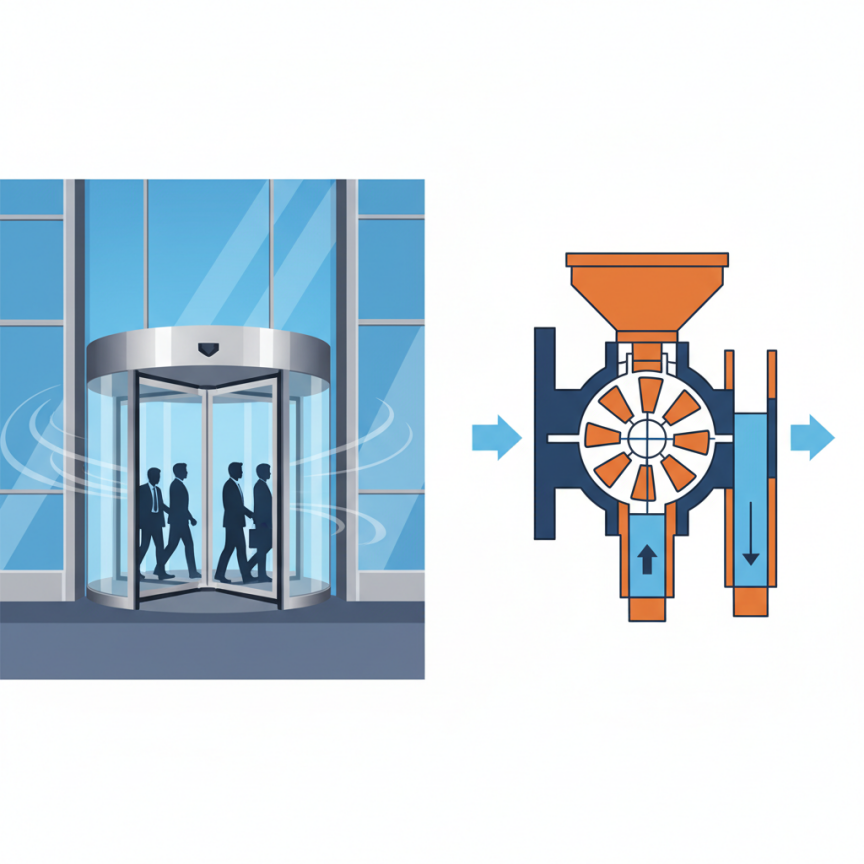
Pour visualiser cette bataille physique invisible, imaginez une lourde porte tournante à l’entrée principale d’un gratte-ciel fortement climatisé, lors d’une journée d’été caniculaire. L’intérieur du bâtiment est maintenu sous pression artificielle afin d’assurer la stabilité du climat intérieur. Si les joints d’étanchéité en caoutchouc de la porte tournante sont détériorés ou usés, l’air froid s’échappe violemment dans la rue, et le système de climatisation doit alors fonctionner deux fois plus fort. La vanne rotative joue exactement le même rôle que cette porte tournante pour votre canalisation de transport :
- Le bâtiment sous pression : votre ligne de transport pneumatique nécessite une pression stable.
- The Pedestrians : les matériaux en vrac dont vous avez besoin pour un transport efficace.
- Les volets de porte usés : des jeux excessifs entre le rotor et le boîtier entraînant des fuites d'air catastrophiques.
Comment les vannes empêchent-elles les fuites ?
Ils empêchent les fuites en retenant les matières dans des poches rotatives, tout en conservant des jeux microscopiques entre les aubes du rotor et le carter.
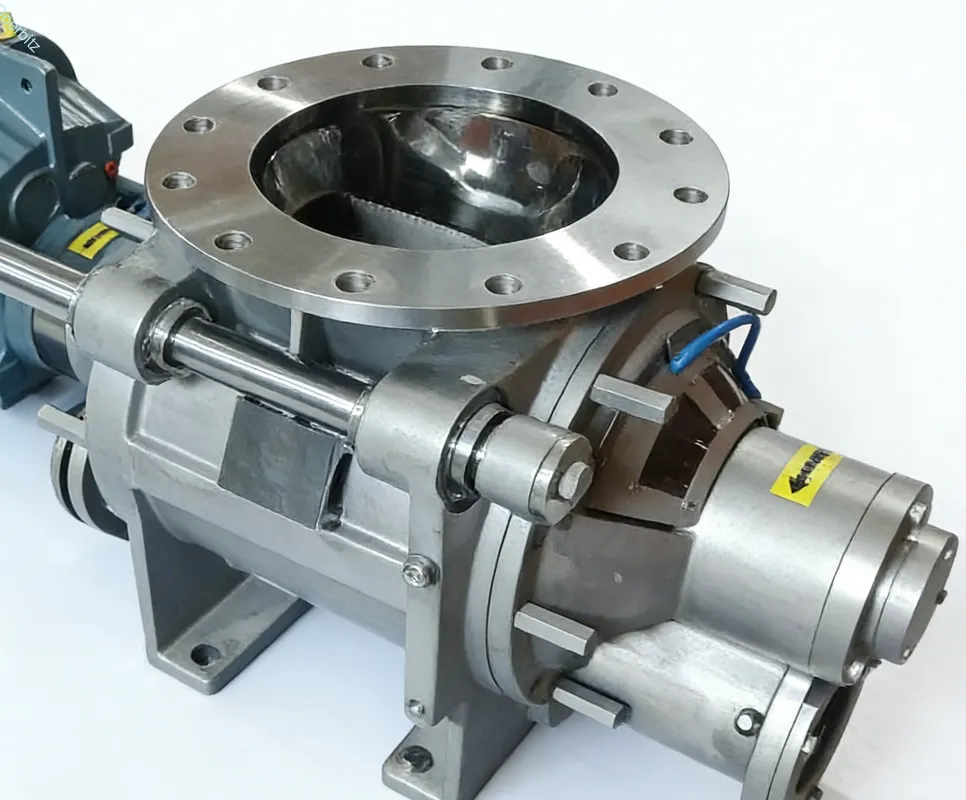
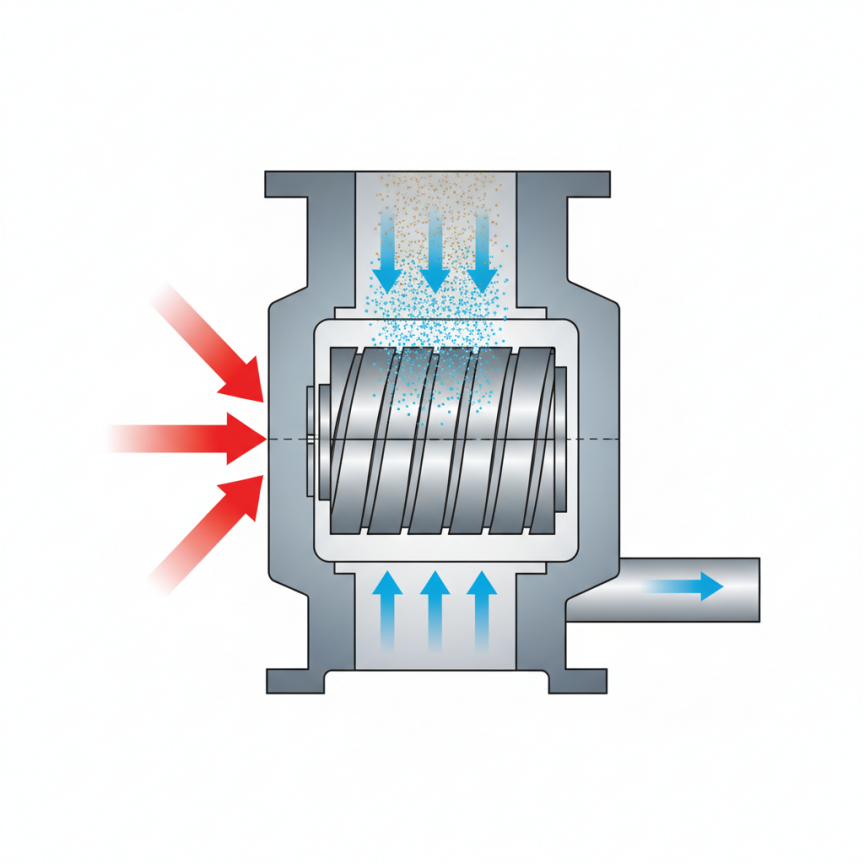
Le cœur de cette solution permanente réside entièrement dans l’ingénierie de précision et la stabilité dimensionnelle. Le principe fondamental selon lequel la vanne rotative à sas empêche les fuites de matière dans le transport pneumatique repose sur l’isolation des environnements de pression différents grâce à une ingénierie mécanique ingénieuse. À mesure que le rotor interne tourne, les alvéoles en forme de V ou de U se remplissent de poudre alimentée par gravité depuis la trémie située au-dessus. Les lames métalliques balayent en continu le boîtier cylindrique usiné avec précision.
Étant donné qu'à tout moment, au moins deux pales du rotor sont en contact physique direct avec l'intérieur du carter de chaque côté, un joint labyrinthe complexe est ainsi formé. Cette barrière physique empêche efficacement l'air de reflouer vers la trémie, le forçant à circuler dans la direction prévue, vers le bas de la conduite.
Chez Doebritz, nous usinons nos carters et rotors à usage intensif selon des tolérances rigoureuses afin de garantir que ce joint à labyrinthe reste parfaitement intact, même en cas de dilatation thermique extrême et de frottement abrasif constant. Lorsque le matériau est déversé dans la ligne de transport, la poche vide remonte en rotation, ne ramenant vers l'entrée qu'un volume infime d'air sous pression, calculé mathématiquement. Ce déplacement contrôlé est normal, mais l'afflux massif de retours d'air incontrôlés est entièrement empêché par l'ajustement serré entre les pales et la paroi.
Comment les rotors assurent-ils l'étanchéité ?
Les rotors assurent l'étanchéité grâce à des tolérances d'usinage très précises, qui permettent généralement de maintenir l'écart entre l'extrémité de la pale et le carter à moins d'une fraction de millimètre.
Le contrôle du jeu est absolument essentiel en matière d’isolation pneumatique. Si l’écart entre la pale rotative et le boîtier statique est trop important, la vitesse de l’air s’engouffrant dans cet interstice minuscule augmente de manière exponentielle, entraînant avec elle des poussières fines hautement abrasives. Ces poussières projetées à grande vitesse agissent comme du papier de verre, accélérant l’usure interne et aggravant les fuites de manière exponentielle au fil du temps. En respectant des tolérances d’usinage extrêmement strictes dès la phase de fabrication, le volume d’air qui s’échappe est limité à un minimum gérable, appelé « air de déplacement ».
Ce fonctionnement continu suit un rythme mécanique très prévisible :
1. Phase d'alimentation en matière : la gravité aspire la poudre dans la cavité vide du rotor à la pression atmosphérique normale.
2. Phase d'isolation : le rotor tourne, assurant ainsi l'étanchéité de la poche remplie contre la paroi incurvée et usinée avec précision du boîtier.
3. Phase de déchargement : la poche s'ouvre directement sur la conduite de transport sous pression, ce qui permet au matériau de tomber en douceur dans le flux d'air.
4. Phase de retour : la poche vide, qui contient désormais un petit volume d'air sous pression, remonte pour recommencer le cycle.
Quels sont les critères de sélection des vannes ?
Pour choisir correctement, il faut adapter les matériaux de fabrication de la vanne, la conception du rotor et ses capacités de purge aux caractéristiques spécifiques de votre poudre et à vos besoins en matière de pression.
Toutes les vannes industrielles ne se valent pas, et les considérer comme des produits interchangeables revient à courir à l'échec du système. Lorsqu'ils évaluent les critères de sélection des vannes rotatives à sas pour les systèmes de manutention de poudres en vrac, les ingénieurs doivent aller bien au-delà des dimensions de base des brides et des débits théoriques. L'importance globale de l'intégration d'une vanne rotative à sas impose que le composant choisi soit capable de résister aux propriétés spécifiques de votre produit (abrasivité, cohésion ou réactivité thermique).
Si vous manipulez des matériaux très abrasifs tels que l'alumine calcinée ou les cendres volantes, les lames standard en acier au carbone s'useront rapidement, détruisant le joint labyrinthe en quelques semaines seulement. À l’inverse, si vous manipulez des matériaux cohésifs et collants, comme le lait en poudre pour nourrissons, des formes de poches inadaptées entraîneront un important colmatage du matériau, rendant la vanne inutilisable. Une vanne défaillante se traduit immédiatement par une fuite dans le système, ce qui provoque un arrêt complet des opérations.
Les environnements de traitement fonctionnant à des températures supérieures à 200 °C nécessitent des calculs de jeu spécifiques afin de tenir compte de la dilatation naturelle du métal sans que le rotor ne se grippe contre le carter. Pour garantir une fiabilité à long terme, les ingénieurs doivent évaluer plusieurs facteurs essentiels :
- Abrasivité du matériau : impose l'utilisation obligatoire de revêtements internes durcis, tels que le chromage dur, ou de pointes de lame en polyuréthane remplaçables.
- Dilatation thermique : nécessite des jeux soigneusement calculés pour éviter un grippage catastrophique du rotor à haute température.
- Exigences en matière de ventilation : permet de déterminer s'il est nécessaire de prévoir un orifice de ventilation spécifique pour évacuer en toute sécurité l'air à haute pression de retour avant qu'il n'atteigne la trémie d'alimentation et ne perturbe le flux de matière entrant.
- Dimensionnement de l'entraînement : il doit être correctement calculé afin de fournir un couple moteur suffisant pour couper des matériaux en vrac denses sans provoquer un blocage de l'ensemble de la chaîne de production.
Comment fonctionnent les solutions sur mesure ?
Les solutions sur mesure consistent à adapter la géométrie et la composition métallurgique du rotor afin de surmonter des difficultés opérationnelles spécifiques que les vannes standard disponibles dans le commerce ne permettent pas de résoudre.
Chez Doebritz, nous croyons fermement aux solutions techniques fondées sur des données opérationnelles réelles plutôt que sur des hypothèses théoriques. Les équipements standard échouent souvent de manière spectaculaire lorsqu'ils sont poussés aux limites extrêmes du transport pneumatique.
Tout récemment, un important client allemand du secteur de la fabrication de produits chimiques a été confronté à de graves problèmes de rebond et de fuites lors du transport de poudre ultra-fine de dioxyde de titane. Les vannes standard en fonte qu’il avait initialement installées ont subi une usure par abrasion rapide, perdant complètement leur étanchéité interne au bout de seulement trois semaines de fonctionnement. Les nuages de poussière qui en ont résulté ont constitué un risque majeur pour la sécurité et ont entraîné l’arrêt complet de sa ligne de conditionnement.
Notre équipe d'assistance technique s'est rendue sur place pour analyser leurs différences de pression spécifiques et les caractéristiques de flux des matériaux. Après avoir identifié la cause première du problème, nous avons conçu une vanne rotative sur mesure dotée d'un rotor à extrémités fermées spécialisé, équipé d'embouts en carbure de tungstène extrêmement résistants. Cette conception sur mesure a permis de maintenir un jeu strict et constant de 0,15 mm malgré l'environnement abrasif. L'importance réelle de la personnalisation de la vanne rotative à sas est apparue immédiatement après l'installation. Le résultat final a été l'élimination totale et définitive des fuites de matière, un débit de transport parfaitement stable et un environnement de travail totalement exempt de poussière pour les opérateurs.
Comment mettre à niveau votre système ?
La modernisation de votre système commence par un audit technique complet de vos différences de pression et de vos points de fuite actuels.
Il est absolument essentiel de bien comprendre les mécanismes précis de l'isolation de la pression pour garantir l'efficacité de toute opération de manutention en vrac. En tant que partenaire de fabrication de confiance, Doebritz s'engage pleinement à vous aider à éliminer les inefficacités coûteuses de vos systèmes ainsi que les émissions de poussière dangereuses. Êtes-vous prêt à moderniser votre ligne de transport pneumatique avec des composants conçus avec précision ? Contactez dès aujourd'hui notre équipe d'ingénieurs experts à l'adresse sales@rotaryvalveco.com pour bénéficier d'un accompagnement sur mesure et commencer à protéger l'intégrité de vos processus.