





A single contamination event can undo months of production planning in a matter of hours. In pharmaceutical manufacturing, even trace levels of cross-contamination may trigger batch rejection, regulatory investigation, product recalls, or customer complaints. In food production, contamination incidents can damage consumer trust far beyond the immediate financial loss.
The challenge is that powder contamination is often invisible until the damage is already done. Fine particles migrate through air currents, settle inside difficult-to-clean equipment zones, cling to seals and transfer lines, or enter production through raw materials long before operators detect a problem.
According to the U.S. FDA, cross-contamination and inadequate cleaning remain among the leading causes of warning letters in pharmaceutical production. Industry studies also estimate that contamination-related issues account for a significant share of unplanned downtime in powder processing environments (Source: FDA Current Good Manufacturing Practice (CGMP) Guidance).
For manufacturers handling powders in pharmaceutical, food, chemical, nutraceutical, or additive manufacturing industries, contamination prevention is no longer only a quality issue. It is a business continuity strategy.
At Doebritz, we work with manufacturers designing hygienic powder handling and transfer systems that reduce contamination risk while improving operational efficiency.
Understanding the Real Sources of Powder Contamination
Before improving contamination control, manufacturers need to understand where contamination actually begins. In most facilities, contamination rarely comes from a single source. Instead, it develops through a chain of small failures across materials, equipment, operators, and environmental conditions.
1. Raw Materials Often Introduce the First Risk
Many contamination problems originate before production even starts. Powders transported in bulk containers may contain metal fragments, plastic debris, excess moisture, or microbial contamination caused by improper storage and transportation.
Suppliers operating under inconsistent quality systems can unintentionally introduce foreign materials into otherwise controlled processes. Hygroscopic powders are especially vulnerable because they absorb moisture during storage, increasing the risk of clumping, microbial growth, and unstable flow behavior.
This is why advanced manufacturers increasingly focus on supplier qualification and incoming inspection protocols instead of relying solely on end-product testing.
2. Equipment Design Can Either Reduce or Multiply Contamination Risk
Even well-managed facilities struggle when equipment is difficult to clean. Dead zones, threaded joints, rough internal surfaces, and poor sealing systems allow powders to accumulate in hidden areas. Over time, trapped residue becomes a source of cross-contamination.
Wear components also contribute to contamination. Seals, gaskets, rotary valves, and conveying systems gradually shed microscopic particles during operation. If materials are incompatible with aggressive powders or cleaning chemicals, the risk increases further.
Compressed air systems are another commonly overlooked source. Oil, water vapor, and particulates entering pneumatic systems can compromise product purity if filtration standards are inadequate.
In hygienic industries, equipment design is not simply about productivity. It directly affects cleanability, validation time, and contamination exposure.
3. Operational Practices Matter More Than Many Facilities Realize
A perfectly designed production line can still fail because of poor operational discipline.
Cross-contamination frequently occurs during product changeovers when cleaning procedures are rushed or inconsistently validated. Operators moving between production zones without proper gowning protocols may unintentionally transfer fine particles across batches.
Facility layout also plays a major role. Powder migration through air movement is especially common in plants lacking directional airflow control or clear segregation between raw material handling and finished product packaging.
4. Packaging and Storage Create Final Exposure Points
Even after processing is complete, powders remain vulnerable. Contaminated containers, incorrect labeling, and poor warehouse segregation can compromise finished goods shortly before shipment.
This final stage is often underestimated because manufacturers assume contamination risks disappear once production ends. In reality, improper packaging controls can undo the effectiveness of the entire manufacturing process.
Building a Strong Powder Contamination Prevention Framework
Contamination prevention works best when treated as a complete system rather than a collection of isolated fixes. Manufacturers that achieve long-term success usually combine equipment design, operational discipline, environmental control, and continuous monitoring into one integrated strategy.
1. Start with Source Control and Risk Assessment
The most effective contamination prevention programs begin before raw materials enter production.
Supplier audits should evaluate quality systems, traceability procedures, storage conditions, and transportation practices. Certifications such as ISO 9001, GMP, and ISO 22000 provide useful benchmarks, but manufacturers should still perform independent verification.
Incoming inspection procedures often include:
| Inspection Area | Typical Method | Purpose |
| Metal contamination | Metal detectors | Detect foreign metallic particles |
| Chemical contamination | FTIR / HPLC analysis | Identify unknown substances |
| Microbial contamination | Pathogen screening | Prevent biological hazards |
| Powder properties | Particle size & moisture testing | Ensure process consistency |
Manufacturers using HACCP-based risk assessment models are generally better prepared to identify critical contamination control points before production begins.
Understanding powder behavior is equally important. Particle size distribution, bulk density, electrostatic tendency, and moisture sensitivity all influence how powders move, settle, and accumulate inside equipment.
2. Hygienic Equipment Design Forms the Foundation
Once contamination enters a process line, removing it becomes expensive and time-consuming. That is why hygienic equipment design is considered one of the most important preventive measures.
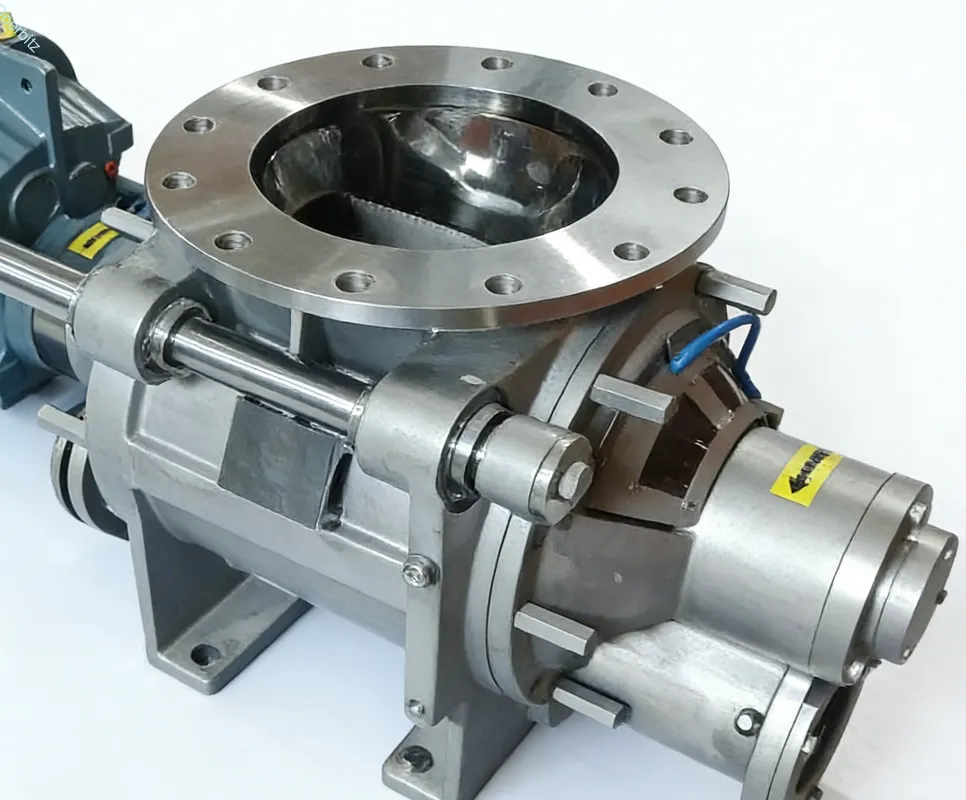
Modern powder processing systems increasingly use 316L stainless steel construction with polished internal surfaces below Ra 0.8 μm to minimize residue adhesion and simplify cleaning.
Equipment should eliminate:
- Dead corners
- Horizontal ledges
- Threaded internal joints
- Difficult-to-access transfer points
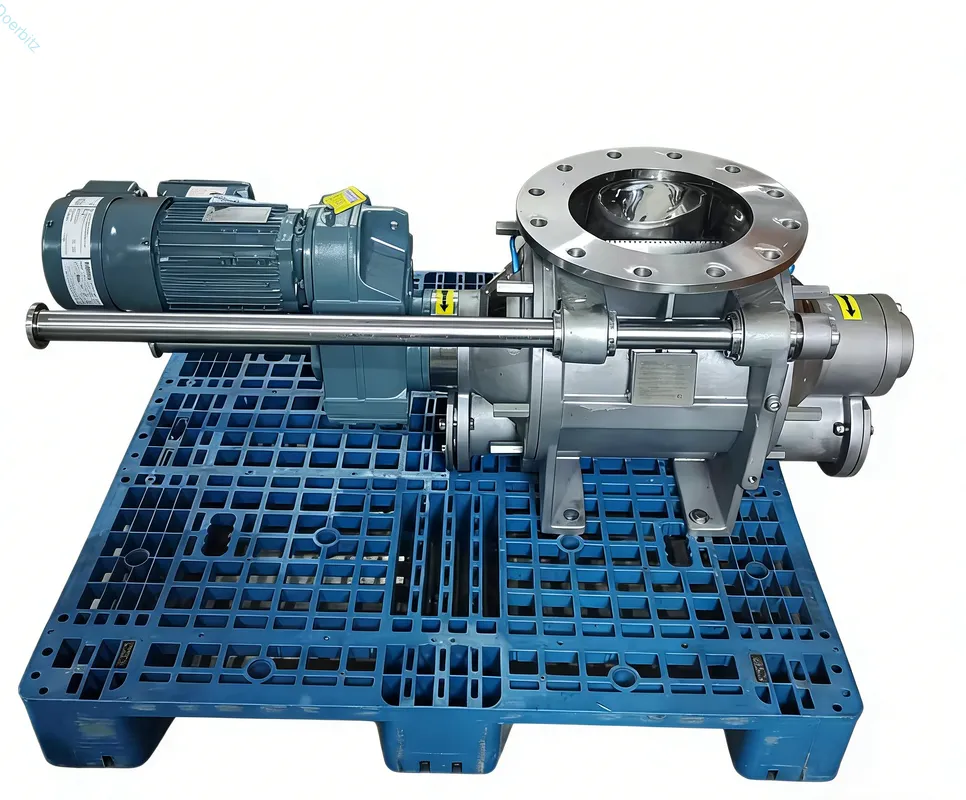
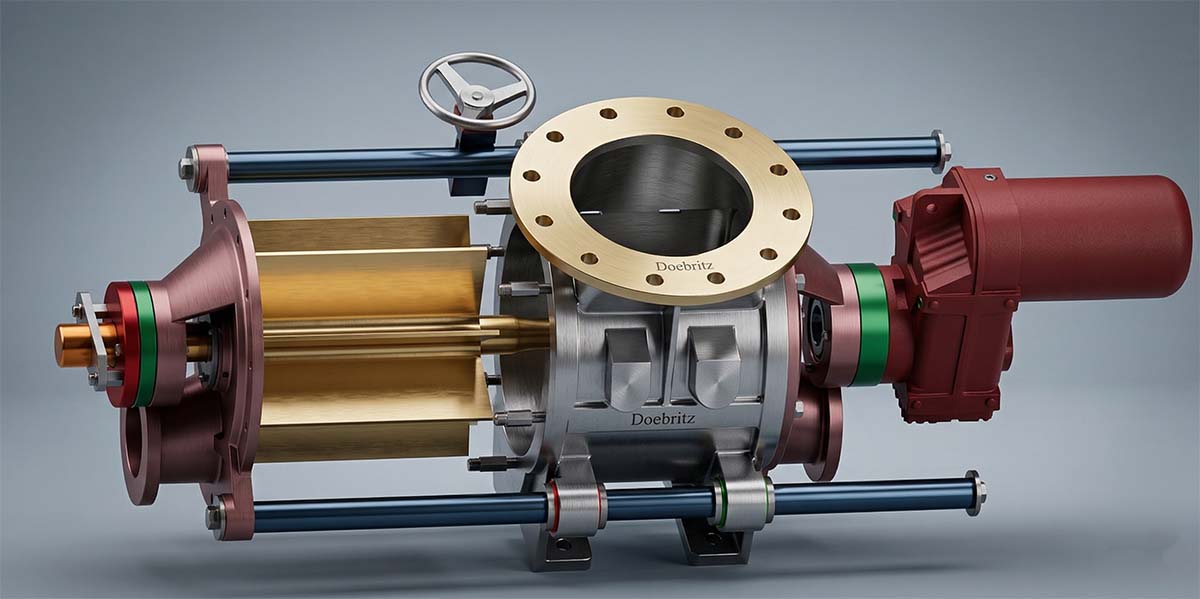
Quick-disconnect systems are becoming increasingly valuable because they allow faster inspection and cleaning during product changeovers. Doebritz integrates tool-less disassembly concepts into selected hygienic powder handling systems to help reduce maintenance downtime and cleaning complexity.
Double sealing systems also play an important role in closed powder transfer applications, particularly where dust leakage and airborne migration must be minimized.
For high-risk pharmaceutical or nutraceutical applications, manufacturers increasingly adopt closed vacuum conveying systems to reduce direct operator exposure and airborne contamination.
Compressed air quality deserves equal attention. ISO 8573-1 Class 1.2.1 filtration standards are now widely used in hygienic industries handling sensitive powders.
3. Process Control Determines Day-to-Day Consistency
Even advanced equipment cannot compensate for weak process discipline. Facilities with strong contamination control programs usually implement clear segregation strategies. Production areas handling different products often use dedicated tools, color-coded cleaning equipment, and controlled personnel flow to minimize accidental crossover.
Cleaning validation is another critical area. Depending on powder properties, manufacturers may choose dry cleaning, wet cleaning, or CIP/SIP systems.
Validation procedures commonly include:
- Swab testing
- TOC analysis
- Visual inspection
- Residue verification
Regulatory agencies increasingly expect manufacturers to demonstrate documented evidence that cleaning procedures consistently remove contaminants below acceptable limits. For toxic or highly potent powders, containment solutions become essential rather than optional. Hermetic transfer systems and sealed powder handling technologies help prevent dust release while protecting both products and operators.
Environmental and Personnel Control Complete the System
Contamination prevention does not stop at the equipment level. The surrounding production environment strongly influences contamination risk.
1. Airflow and HVAC Systems Control Invisible Particle Movement
Fine powders travel easily through uncontrolled airflow. Facilities handling sensitive materials therefore rely heavily on properly designed HVAC systems. High-efficiency HEPA filtration systems meeting ISO 14644 cleanroom standards help control airborne particles and microbial contaminants. Positive pressure zones, directional airflow, and regular filter integrity testing all contribute to stable contamination control conditions.
Without proper airflow management, even well-segregated production areas may experience airborne particle migration between rooms.
2. Personnel Training Remains One of the Most Overlooked Defenses
Many contamination incidents still trace back to human error. Improper gowning, inconsistent hygiene practices, and shortcuts during maintenance activities continue to create avoidable risks. Cleanroom garments, gloves, masks, and sanitization procedures only work when personnel understand why the procedures matter.
Facilities that invest in recurring contamination prevention training generally achieve more consistent long-term compliance than those relying solely on SOP documentation.
Monitoring and Verification Keep Prevention Strategies Effective
Contamination control is not a one-time improvement project. It requires continuous verification. Modern facilities increasingly use real-time monitoring systems to detect abnormal conditions before contamination spreads.
Common technologies include:
- Airborne particle counters
- Metal detection systems
- Magnetic separators
- Near-infrared spectroscopy for material verification
Environmental monitoring programs also include microbial surface sampling and air testing for viable and non-viable particles.
Digital batch records are becoming especially valuable because they improve traceability and simplify audit preparation. Automated alert systems can notify operators immediately when environmental conditions exceed acceptable limits.
The Future of Powder Contamination Prevention
Manufacturing facilities are moving toward predictive contamination prevention rather than reactive troubleshooting.
1. Smart Manufacturing Is Changing Contamination Control
AI-assisted monitoring systems can now analyze sensor data to identify early contamination indicators before operators notice visible symptoms.
IoT-enabled equipment continuously collects operational data from transfer systems, filters, environmental sensors, and production lines. Manufacturers can then use predictive analytics to identify contamination risks earlier in the process.
Digital twin technology is also gaining traction in powder processing environments. Virtual simulations allow engineers to evaluate powder flow behavior, dust accumulation zones, and cleaning accessibility before equipment is physically installed.
2. Advanced Surface Technologies Reduce Powder Adhesion
New anti-stick coatings are helping reduce powder buildup inside conveying and processing systems. Some advanced materials also include antimicrobial or self-cleaning properties that support hygienic manufacturing environments. Mono-material construction concepts are becoming more attractive as manufacturers seek to reduce compatibility issues between cleaning agents, powders, and equipment surfaces.
3. Regulatory Expectations Continue to Increase
Regulatory agencies are placing greater emphasis on exposure control, electronic documentation, and scientifically validated contamination prevention strategies. New standards such as ISO 52949 for additive manufacturing powders reflect the growing complexity of powder handling across industries.
Manufacturers that modernize their contamination control systems early are likely to adapt more smoothly to future compliance requirements.
Conclusion
Powder contamination prevention is not simply about avoiding product defects. It directly affects production efficiency, regulatory compliance, operational costs, and long-term customer trust. Manufacturers that rely only on reactive cleaning or end-product testing often discover problems too late. The most successful facilities approach contamination prevention proactively by combining hygienic equipment design, disciplined operational control, environmental management, and continuous monitoring into one unified strategy.
The long-term return is substantial: fewer batch rejections, lower downtime, improved audit readiness, and more stable product quality across every stage of production.
We continue to support manufacturers with hygienic powder processing solutions designed for cleanability, containment, and reliable operational performance across demanding industrial environments.
Contact Doebritz today to schedule a contamination risk assessment and discover how hygienic powder handling solutions can help your facility move closer to zero-contamination production goals.