





For many manufacturers, powder processing has quietly become one of the biggest operational bottlenecks on the production floor. While packaging lines, robotics, and digital monitoring systems continue to evolve rapidly, powder feeding and dosing systems in many factories still rely on aging mechanical designs that struggle with material fluctuation, cleaning downtime, and inconsistent accuracy.
The challenge becomes even more visible in industries where compliance standards are tightening every year. Food manufacturers must reduce allergen contamination risks. Chemical plants are under pressure to improve material traceability and worker safety. Pharmaceutical producers are expected to maintain stricter GMP environments while increasing throughput at the same time.
This is why industrial powder automation trends are no longer focused only on speed. The industry is shifting toward systems that combine intelligent control, flexible integration, predictive maintenance, and sustainability-driven engineering.
Companies such as Doebritz are increasingly designing powder automation solutions not just as standalone machines, but as connected process platforms built for long-term digital manufacturing strategies.
The Industry Is Moving Beyond Traditional Feeding Systems
For decades, powder feeding equipment was primarily evaluated on basic throughput capacity. Today, manufacturers are asking more complex questions:
- Can the system predict flow instability before it affects production?
- Can cleaning and maintenance be completed without stopping the entire line?
- Can the feeder integrate into a plant-wide digital control architecture?
- Can delicate powders be handled without degradation?
- Can production data support traceability and optimization?
These questions are driving several major automation trends across powder handling industries.
Five Powder Automation Trends Defining 2026–2027
Trend 1: AI-Driven Predictive Control
Artificial intelligence in manufacturing has moved decisively beyond the pilot phase. According to a Rootstock Software survey covering 520 digital transformation leaders across North America, Europe, and Asia, predictive AI adoption rose 12 percentage points to 48% entering 2026, with 94% of respondents now using some form of AI technology. The focus has shifted from experimental use cases to applications tied directly to operations and production performance.
For powder processing, this means AI is no longer just monitoring equipment—it is actively controlling it. Autonomous industrial AI deployments are delivering 5–10× ROI within three years as systems evolve from rule-based automation to self-learning operations tailored to real-time material behavior, temperature fluctuations, and humidity. As Deloitte projects that agentic AI adoption in manufacturing will quadruple in 2026 from 6% to 24%, powder feeders and solid pumps with AI-ready control architectures will become the new baseline.
Trend 2: Modular Automation Architectures
The monolithic, single-purpose powder handling system is losing its appeal. Facing volatile demand, shorter production runs, and frequent changeovers, manufacturers increasingly demand equipment that can scale with their business rather than lock them into fixed capacities. Smart factories integrating real-time data platforms are projected to reach $198.1 billion by 2027, driven largely by modular, interoperable designs.
The emerging industry standard favors suppliers offering flexible configurations—equipment that can handle capacities from 2 liters per hour to over 6,700 liters per hour using the same core architecture, with swappable components that adapt to different materials without replacing entire systems.
Trend 3: Zero-Downtime Maintenance Design
The AI paradox in maintenance is striking. While 58% of manufacturing teams are now using AI in their operations and 75% reported measurable ROI in under six months, 79% of teams saw unplanned downtime stay the same or increase over the past year, according to MaintainX‘s 2026 State of Industrial Maintenance Report. Technology adoption alone does not guarantee reliability gains.
What does work? Equipment designed for rapid, tool-free maintenance intervention. Predictive maintenance programs combined with maintainable-by-design equipment deliver documented unplanned downtime reductions of 30–50% compared to reactive strategies. In powder processing, where disassembly traditionally requires specialized tools and hours of labor, the shift toward tool-free, 10-minute access designs represents a fundamental rethinking of maintenance strategy.
Trend 4: Sustainability-Focused Processing
Sustainability is no longer a marketing badge—it has become a cost structure issue. In 2025, over 85% of manufacturers reported improved operational efficiency after deploying AI, with cost savings ranging from 10–30%, and much of that improvement derived from waste reduction and energy optimization rather than simple throughput gains.
For powder handlers, material waste is both an economic and environmental problem. Every kilogram of powder that degrades due to high-shear compression, every batch rejected for particle inconsistency, represents lost raw materials and increased disposal costs. Modern processing equipment with low-shear design minimizes material compression, preserving particle integrity while reducing waste—a direct win for both bottom-line efficiency and environmental compliance.
Trend 5: Digital Twin Implementation for Process Optimization
The digital twin market is expanding at an extraordinary pace. Gartner predicts that by 2027, 40% of large industrial companies will use digital twin technology, and McKinsey estimates the global market will reach $73.5 billion by that same year.
In powder processing, digital twins are proving invaluable for optimization. They allow engineers to simulate material flow, predict feeding behavior under different conditions, and identify bottlenecks before any physical equipment is touched. The result? Companies adopting digital twins have demonstrated operational cost savings of up to 30% while reducing time-to-market by 50% in manufacturing environments. For chemical and food manufacturers managing dozens of recipes and material types, digital twins transform process optimization from reactive troubleshooting to proactive design.
Technology Deep-Dive: Aligned with the Trends
What does all this mean in practical engineering terms? The powder feeding systems that will lead in 2026–2027 share several core capabilities.
First, real-time weight feedback systems such as SFT-II technology integrate hanging or platform load cells for continuous monitoring, achieving ±0.5% accuracy through real-time calibration. This closed-loop approach bridges the gap between volumetric and gravimetric control, compensating for density variations that would otherwise compromise batch consistency.
Second, AI-ready control architectures combine PID algorithms with density compensation, enabling predictive adjustments before flow disruptions occur. This is not speculative future-proofing—it is an operational necessity in an environment where over 64% of manufacturers are already using or planning AI for predictive maintenance, and 55% for process optimization.
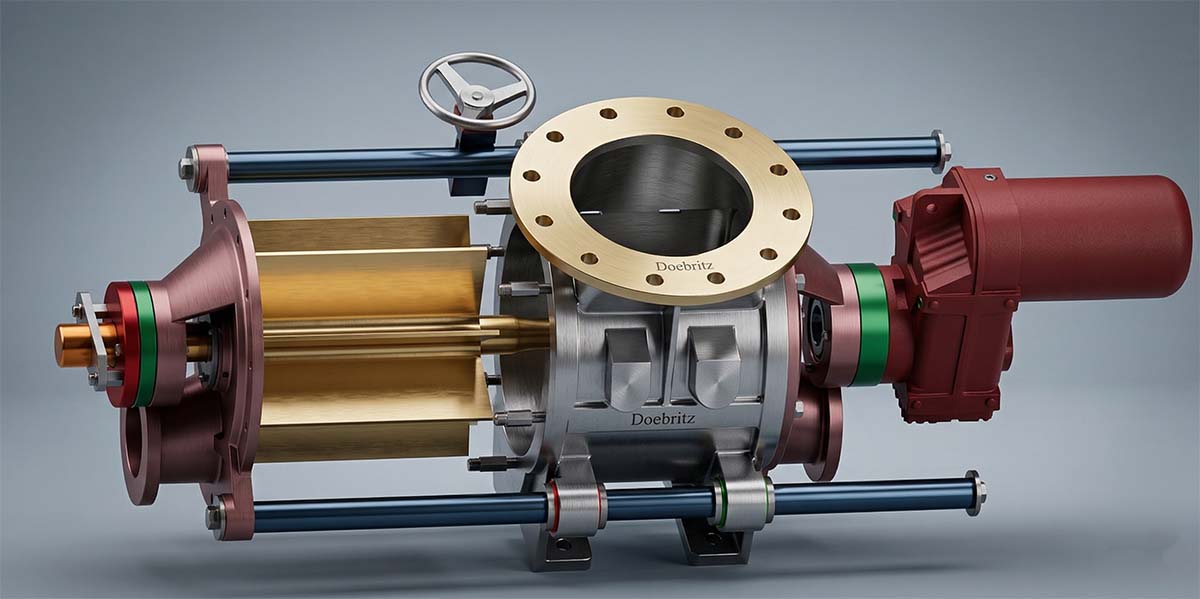
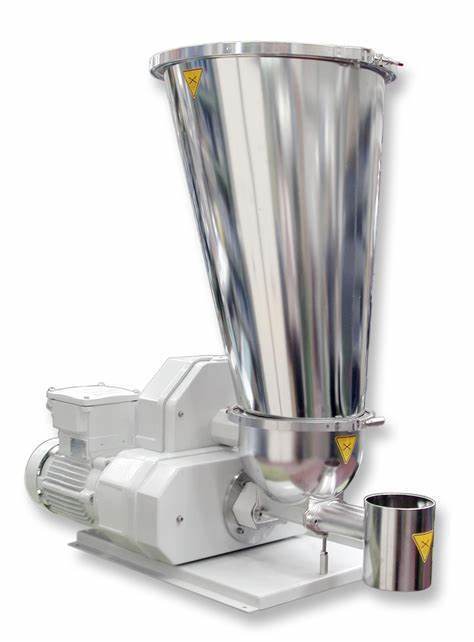
Third, quick-disassembly structures with spherical hoppers and horizontal mixers prevent material retention while allowing complete cleaning or screw replacement within 10 minutes without tools. In pharmaceutical and food applications where cross-contamination risks demand rigorous cleaning protocols, tool-free access directly reduces non-productive time between batches.
Fourth, low-shear twin-screw design minimizes material compression through dual-screw meshing, preserving particle integrity for heat-sensitive substances and friable materials. When supplemented by gear mechanisms for precise volumetric control within sealed chambers, the result is gentle conveyance without sacrificing feeding accuracy over a range of 2 to 6,700 liters per hour.
Finally, full automation integration through PLC and DCS remote control supports flow adjustment, anomaly alerts, and remote start/stop—enabling manufacturers to move toward lights-out production while maintaining oversight across multiple lines simultaneously.
Industry-Specific Impact Is Driving Faster Adoption
The value of these capabilities varies by sector, but the underlying demand is universal.
In chemical manufacturing, batch consistency and hazardous material containment dominate concerns. Automated, sealed powder feeding systems reduce operator exposure to volatile compounds while maintaining repeatable feeding accuracy across thousands of cycles. With global chemical manufacturers facing tightening environmental regulations, closed-system automation is shifting from optional to mandatory.
In food processing, allergen control and traceability present the greatest challenges. Equipment designed with quick-disassembly and spherical hopper geometry eliminates material retention zones where allergens could accumulate between runs. For dairy ingredients, sugar powders, and other free-flowing materials, sanitary design combined with ±0.5% feeding accuracy supports both quality consistency and regulatory documentation.
For pharmaceutical production, GMP compliance and cleanroom efficiency are non-negotiable. Modular configurations that adapt to different excipients without cross-contamination allow manufacturers to maintain ISO-class environments while scaling production. The industry is accelerating its shift from batch to continuous manufacturing—a transition that demands powder feeding systems capable of sustained, high-precision operation over extended periods without intervention.
Competitive Advantage Through Early Adoption
The manufacturers capturing competitive advantage in 2026–2027 are not waiting for perfect conditions—they are adopting strategic upgrades now.
Cost reduction follows a clear path: proactive repairs cost 4 to 5 times less than emergency repairs on the same asset. Material savings accumulate through reduced waste, energy efficiency improves through optimized flow control, and labor costs decrease through automation of previously manual weighing and feeding tasks.
On the quality side, 95% of organizations that implement predictive maintenance report positive ROI, with 27% achieving full payback within the first 12 months. Reduced rejects, consistent product specifications, and verifiable traceability translate directly into customer confidence and market positioning. Early adopters are not just improving operations—they are repositioning themselves as innovative partners capable of meeting increasingly sophisticated customer demands.
Perhaps most significantly, participation in current automation upgrades builds organizational competence that compounds over time. As AI maturity moves from “assistant” to “agent” and digital twins become standard rather than exceptional, companies with modern, interoperable powder handling infrastructure will have a head start that laggards cannot easily close.
Implementation Roadmap for 2026–2027
Adopting advanced powder automation does not require a factory-wide overhaul overnight. A phased approach minimizes disruption while accelerating return on investment.
Phase One (Months 1–3): Assess and Prioritize
Conduct a material flow audit across critical feeding points. Identify bottlenecks where unplanned downtime occurs most frequently and materials are most susceptible to degradation. Benchmark current feeding accuracy, changeover time, and waste rates to establish baselines for ROI calculations.
Phase Two (Months 3–6): Strategic Upgrade
Replace one high-impact powder feeding station—typically on a bottleneck line or where manual handling creates safety or quality risks. Choose modular equipment that supports remote control and real-time monitoring to integrate with existing PLC or DCS infrastructure.
Phase Three (Months 6–12): Workforce Integration
New technology requires new skill sets. Train operators on digital interfaces, anomaly alert protocols, and tool-free maintenance procedures. Cross-functional workshops linking production, maintenance, and quality teams ensure that automation delivers across departments rather than creating isolated islands of efficiency.
Phase Four (Months 12–24): Scale and Optimize
With validated results—typically 12–18 months for full ROI realization in powder automation investments—expand automated feeding across additional lines. Use accumulated operational data to refine PID parameters, update predictive maintenance schedules, and inform future capital planning. For organizations ready to advance further, this phase marks the natural entry point for digital twin integration, enabling plant-wide flow simulation and scenario testing without production interruption.
Throughout this roadmap, success depends not on technology alone but on disciplined execution. As the MaintainX report underscores, reliability gains come from execution maturity, not system adoption alone. Organizations that combine modern tools with strong fundamentals—including better training, disciplined scheduling, and a culture that prioritizes proactive work over constant troubleshooting—will far outperform those that simply install new equipment without changing operational habits.
Conclusión
The powder processing industry has entered a period of accelerated transformation. What was once considered cutting-edge—real-time weighing, remote control, predictive maintenance—is rapidly becoming a baseline expectation. Global automation adoption is concentrated around technologies supporting resilience, scalability, and recurring returns, with Frost & Sullivan identifying autonomous AI as becoming the industrial control layer.
The five trends outlined in this article are not speculative. They are already visible in manufacturing operations: AI-driven predictive control delivering documented returns, modular architectures enabling flexible scaling, zero-downtime maintenance designs cutting costs, sustainability-focused processing reducing waste, and digital twins optimizing processes without physical trial-and-error.
For strategic planners and technology scouts, the question is no longer whether to pursue these capabilities, but how quickly to integrate them. The market is moving, and early adopters are positioning themselves ahead of competitors still locked into legacy equipment and reactive maintenance practices.
Ready to assess where your current powder handling systems stand against the 2026–2027 automation benchmarks? At Doebritz, we work with chemical, food, and pharmaceutical manufacturers to implement modular, AI-ready feeding solutions that reduce downtime, preserve material integrity, and scale with your business.
Contact our team today to schedule a flow audit or consultation—let us help you turn these trends into tangible operational advantages.