



In powder processing plants, cleaning is often treated as a secondary task — something that happens after production is finished. But in reality, cleaning directly affects productivity, product quality, equipment lifespan, and even whether a factory can pass customer audits.
For manufacturers handling milk powder, protein blends, seasonings, pharmaceutical ingredients, or chemical powders, an improperly cleaned industrial powder mixer can create far more than hygiene issues. Residual material inside the mixer may lead to cross-contamination, unstable batch quality, longer downtime, and unexpected maintenance costs.
This is one reason why more factories are moving away from traditional manual cleaning methods and investing in CIP (Clean-In-Place) systems.
The transition is not simply about automation. It reflects a larger industry shift toward higher hygiene standards, lower labor dependency, and more stable production efficiency.
According to the European Hygienic Engineering & Design Group (EHEDG), hygienic equipment design and validated cleaning processes are becoming increasingly important as food and pharmaceutical regulations continue tightening globally.
For industrial powder mixer systems, the question is no longer whether cleaning matters. The real question is: Which cleaning method is actually more cost-effective over time?
Why Cleaning Has Become a Core Part of Powder Processing Efficiency
In the past, many factories accepted long cleaning cycles as a normal part of production. Operators manually opened equipment, disassembled components, scrubbed surfaces, and reassembled the system before the next batch began.
That approach still exists today, especially in smaller workshops.
However, production environments have changed significantly. Manufacturers now face:
- Shorter delivery cycles
- More frequent product changes
- Higher hygiene expectations
- Rising labor costs
- Increased audit requirements
Under these conditions, cleaning is no longer just maintenance work. It directly impacts overall production capacity. A mixer that requires three hours of cleaning between batches effectively loses several hours of productive operation every day.
That is why automated CIP cleaning systems are becoming increasingly common in modern powder processing lines.
Understanding the Difference Between CIP and Manual Cleaning
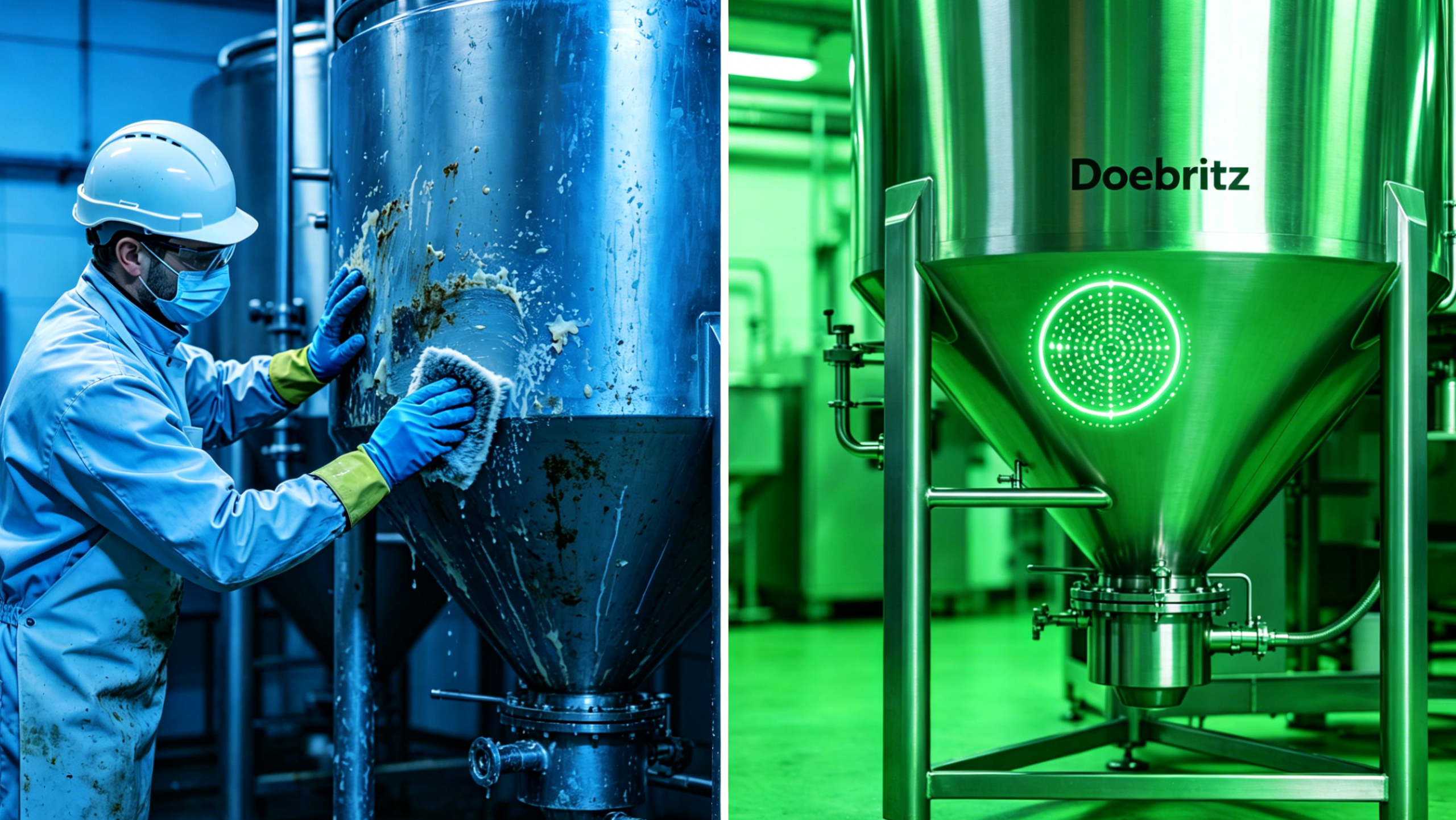
The difference between the two methods goes beyond automation. Manual cleaning depends heavily on operator experience and physical access to internal equipment surfaces. Workers usually disassemble parts of the mixer, wash components individually, inspect visible residue, and reassemble the system afterward.
CIP cleaning works differently.
A CIP system circulates cleaning liquids through integrated spray nozzles and pipelines inside the equipment without major disassembly. Cleaning parameters such as temperature, chemical dosage, and spray duration can often be controlled automatically.
For industrial powder mixers, this creates major differences in efficiency, hygiene consistency, and operating cost.
Cleaning Efficiency Is Often the First Major Difference
The most obvious difference between CIP and manual cleaning is time.
Traditional manual cleaning usually involves:
- Equipment shutdown
- Opening the chamber
- Disassembling certain components
- Manual washing and wiping
- Drying
- Reassembly
- Final inspection
Depending on mixer size and product residue, the process may take two to three hours or longer.
By comparison, a modern CIP system can often complete a cleaning cycle within 30 to 60 minutes without requiring full equipment disassembly.
For factories running multiple batches daily, the time difference becomes substantial over an entire year. Less cleaning downtime means more available production hours. This is especially important in industries with high product turnover or seasonal demand fluctuations.
Cleaning Consistency Is Where CIP Systems Gain a Bigger Advantage
Speed alone is not enough. Cleaning quality matters even more. One of the biggest limitations of manual cleaning is inconsistency.
Even experienced operators may accidentally overlook internal corners, pipe connections, ribbon agitator gaps, discharge ports, and hidden powder accumulation zones. This becomes risky when processing allergen-containing materials, pharmaceutical ingredients, or moisture-sensitive powders.
CIP systems improve consistency because cleaning cycles follow repeatable parameters. Spray coverage, water temperature, detergent concentration, and cleaning duration can all remain standardized. This helps reduce “dead corners” where material residue may accumulate.
According to EHEDG hygienic design guidance, repeatable automated cleaning processes improve sanitation reliability and reduce contamination risk in food and pharmaceutical production environments.
For stainless steel industrial powder mixers, integrated CIP systems also help maintain surface cleanliness without excessive abrasive contact.
Labor Cost Is Quietly Becoming One of the Biggest Pressures
Many factories initially focus only on the equipment purchase price. But long-term labor costs often become much larger than expected.
Manual cleaning typically requires:
| Cleaning Method | Typical Labor Requirement |
| CIP Cleaning | 1 operator for multiple machines |
| Manual Cleaning | 2–3 operators per cleaning cycle |
In facilities operating several mixers simultaneously, labor demand increases quickly.
Manual cleaning also brings about indirect costs, including operator fatigue, training requirements, cleaning inconsistency, a higher risk of human error, and increased safety exposure.
By comparison, automated CIP systems reduce operator involvement significantly. Instead of physically entering cleaning areas or dismantling components repeatedly, operators mainly supervise cleaning cycles and verify sanitation results.
Equipment Protection Is Another Hidden Financial Factor
Many manufacturers underestimate how much damage manual cleaning can cause over time. Aggressive scrubbing, improper tooling, and repeated disassembly can gradually compromise stainless steel surfaces, seals and gaskets, ribbon agitator alignment, along with fasteners and fittings.
Small scratches on stainless steel surfaces are particularly problematic because they may create areas where powder residue or bacteria accumulate more easily.
CIP systems help reduce this risk by using controlled cleaning pressure and chemical circulation rather than aggressive physical contact.
For stainless steel ribbon mixers, this approach delivers two key benefits: lower long-term maintenance costs and a longer overall equipment service life.
Some equipment manufacturers estimate that automated cleaning systems can reduce cleaning-related component damage by roughly 30% compared with frequent manual cleaning procedures.
Compliance Standards Are Becoming Harder to Ignore
Food, pharmaceutical, and nutraceutical manufacturers now face stricter customer audits and hygiene inspections than ever before. Cleaning documentation, sanitation repeatability, and contamination prevention have become central parts of compliance reviews.
Manual cleaning processes can be difficult to standardize because results depend heavily on operator execution.
CIP systems greatly streamline compliance by delivering repeatable cleaning parameters, automated process control, straightforward cleaning validation, lower contamination risks, and comprehensive hygiene record-keeping.
In Europe, standards such as EN 13570 emphasize hygienic requirements for food processing machinery and cleaning systems.
For export-oriented manufacturers, especially those supplying food or pharmaceutical products internationally, cleaning compliance is increasingly linked to commercial competitiveness.
Real Cost Comparison Over One Year
At first glance, CIP systems may appear more expensive because of higher initial equipment investment. However, the long-term operating calculation often tells a different story.
| Cost Area | CIP Cleaning | Manual Cleaning |
| Labor Cost | Lower | Higher |
| Downtime Loss | Lower | Higher |
| Maintenance Risk | Lower | Higher |
| Cleaning Consistency | Stable | Variable |
| Inspection Compliance | Easier | More difficult |
When calculated annually, CIP systems often generate savings through:
- Reduced labor hours
- Shorter cleaning downtime
- Lower maintenance frequency
- Improved production continuity
- Fewer rejected batches
For high-frequency production lines, these operational savings can gradually outweigh the higher initial investment.
Why Integrated CIP Design Matters
Not all CIP systems are equally effective. Some factories install external CIP setups separately, which may create additional pipeline complexity and maintenance requirements.
The vertical stainless steel ribbon mixer from Doebritz integrates the CIP system directly into the equipment structure. This integrated approach helps simplify cleaning operations while improving internal spray coverage.
The system supports:
- Automatic temperature control
- Adjustable cleaning agent dosage
- Fast internal circulation cleaning
- Compatibility with stainless steel construction
- Flexible configuration based on batch size and production needs
Combined with the vertical mixer structure, the CIP system also reduces manual access requirements during cleaning procedures.

The Industry Is Clearly Moving Toward Automated Cleaning
The shift from manual cleaning to CIP automation is not simply a technology trend. It reflects larger manufacturing realities.
Today’s factories require equipment capable of longer operation with minimal downtime, adherence to stricter hygiene standards, reduced reliance on manual labor, compatibility with flexible production schedules, and consistent compliance with increasingly rigorous audit requirements.
For industrial powder mixer systems, automated CIP cleaning supports all of these goals simultaneously.
That is why CIP technology is becoming standard in many modern food, pharmaceutical, and specialty powder production facilities.
Conclusion
Cleaning is no longer a background task in powder processing operations. It has become a direct factor in productivity, compliance, maintenance costs, and product quality.
While manual cleaning may still work for certain low-volume operations, its limitations become increasingly visible as production demands grow.
CIP systems deliver distinct advantages across cleaning speed, hygienic consistency, labor efficiency, equipment protection, and regulatory compliance. For manufacturers seeking long-term operational efficiency, automated cleaning is quickly becoming the more cost-effective solution.
The Doebritz vertical ribbon industrial powder mixer combines stainless steel durability, efficient ribbon agitation, and an integrated CIP cleaning system to help manufacturers reduce downtime while maintaining high hygiene standards across food, pharmaceutical, chemical, and industrial applications.
Explore the CIP-enabled vertical ribbon mixer solutions from Doebritz and discover how automated cleaning can reduce labor costs, improve hygiene compliance, and increase production efficiency for your facility.